Expert vitiligo treatment in Lucknow is available at The Velvet Skin Centre. Our best dermatologist offers advanced therapies to restore even skin tone and boost confidence.
Dr. Asma Parveen, MBBS, MD Dermatology | 14+ Years Experience
⭐ 4.9 Google Rating | 1,800+ Reviews
Call to discuss your Vitiligo, Treatment Options & Cost.
Schedule Your Dermatology Consultation.
Get expert skin and hair care advice.
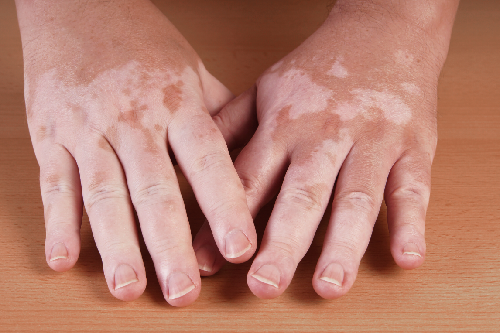
Vitiligo is a stable condition where pale white patches develop on the skin. The lack of melanin and pigment in the skin causes it. Vitiligo can affect any skin area, but it generally happens on the face, neck and hands and in skin creases.
The pale areas of the skin are more vulnerable to sunburn, so it’s essential to take additional care when in the sun and use sunscreen with a high sun protector factor (SPF).
Lack of pigment in your skin (melanin) generates Vitiligo. The cause of why this occurs is unknown. Research points Vitiligo could be the result of the following:
| Cause | How It Affects |
|---|---|
| Autoimmune Condition | Your immune system mistakes fit cells (melanocytes) as foreign invaders. It makes your immune system overreact and develop antibodies to destroy your melanocytes. |
| Genetic Changes | A genetic mutation or changes in your body’s DNA can affect your melanocyte’s function. There are over thirty genes that can expand your risk of developing Vitiligo. |
| Stress | The amount of pigment your melanocyte cells create may vary if you experience systematic emotional stress or physical stress on your body, especially after an injury. |
| Environmental Triggers | Factors like ultraviolet radiation and toxic chemical exposure can affect your melanocyte cells’ function. |
Researchers now understand that Vitiligo is an autoimmune condition in which the body eliminates parts of itself. It happens when a part of the resistant system starts to strike and kill the pigment compartments — melanocytes — in the skin, resulting in the impression of white patches. Melanocytes are cells responsible for producing melanin, the stain that shows skin, hair, and eyes their colour.
These factors are known to increase the risk for Vitiligo:
| Risk Factor | Details |
|---|---|
| Family History & Genes | About 20% of people with Vitiligo have at least one close family member with this skin disorder. Variations in over 30 genes have been identified and associated with Vitiligo. |
| Environmental Triggers | Potential triggers include sunburn, exposure to certain chemicals, and concussion or injury to the skin. These can also nudge Vitiligo to spread. |
| Other Autoimmune Diseases | People with autoimmune disorders like psoriasis, lupus, Hashimoto’s disease, or alopecia areata are at advanced risk. 15–25% of people with Vitiligo have another autoimmune disease. |
Symptoms can be mild and only present in a small area of your body, or severe and cover a large skin area. Some people with a Vitiligo background have itchy skin before depigmentation starts.
Symptoms of Vitiligo can occur anywhere on the skin of your body. The most typical places include:
You should consult a dermatologist if:
Early consultation can help manage the condition better and prevent further spread.
When treating Vitiligo, board-certified dermatologists create a treatment plan with these goals in mind:
There is no one best treatment for Vitiligo. Before creating a treatment plan, a dermatologist considers what is best for each patient — age, overall health, the type of Vitiligo, where it occurs, and its progress.
| Treatment | What It Does | Best For |
|---|---|---|
| Topical Corticosteroids | Restore skin colour by reducing immune response | Recent-onset vitiligo, short-term use |
| Tacrolimus or Pimecrolimus Cream | Calm immune response without steroids | Children and adults, face and neck |
| Calcipotriene | Repairs lost pigment (effective with corticosteroids) | Children and adults |
| Phototherapy (UV Light) | Exposes skin to UV light to restore natural skin colour | Large areas of the body |
| Excimer Laser | Targets small sections of skin with less effect on healthy skin | Localized patches |
| Oral Prednisone | Slows down the development of new spots | Rapidly spreading vitiligo |
| Permanent Makeup (Micropigmentation) | Semi-permanent cosmetic pigment camouflages white patches | Face, hands, or nearly anywhere |
Vitiligo Camouflage Permanent Makeup is a beneficial vitiligo treatment. Results are immediate and last up to 3 years. The semi-permanent cosmetic pigment camouflages the white patches of skin so they blend with your normal skin tone. This treatment can be performed on the face, hands, or nearly anywhere. It looks like a professionally applied makeup concealer but does not smudge or wash off.
Cosmetic Camouflage, or Camouflage Tattooing, can help improve the skin’s appearance and your self-image. There’s growing understanding and consensus among medical practitioners concerning this cosmetic solution they can suggest with enthusiasm and proven results for patients.
Have Realistic Expectations with Cosmetic Camouflage:
In most cases, after a couple of applications, you will see significant improvement in the appearance of the area.

The cost of vitiligo treatment depends on the treatment type, area, and number of sessions required.
| Treatment | Price |
|---|---|
| Topical Medications | Starting from ₹500 |
| Phototherapy (per session) | Starting from ₹1,500 |
| Excimer Laser (per session) | Starting from ₹2,000 |
| Permanent Makeup (Micropigmentation) | Starting from ₹15,000 |
| Package Pricing | Discounted rates available for multiple sessions |
*Final pricing is determined after your consultation with Dr. Asma, based on your specific needs and treatment plan.
In most cases, after a couple of applications, you will see significant improvement in the appearance of the area.
Dr. Asma Parveen is a renowned dermatologist with an MD in Dermatology and over 14 years of clinical experience. She is known for her honest approach, personalised treatment plans, and natural-looking results.
Vitiligo requires accurate diagnosis and a personalised treatment plan based on the type, location, and progression of the condition. Dr. Asma personally evaluates every patient and frequently combines treatments such as phototherapy with topical medications for optimal results.


Indira Nagar
Thakurganj
Vitiligo is a condition where pale white patches develop on the skin due to the lack of melanin and pigment. It can affect any skin area but commonly appears on the face, neck, hands, and skin creases.
No, vitiligo is not contagious. It is an autoimmune condition and cannot be spread from person to person.
Vitiligo is a chronic condition without a permanent cure, but it is highly manageable. With the right treatment plan, pigmentation can be restored in many cases, and the spread can be controlled.
At The Velvet Skin Centre:
Your exact cost will be confirmed at consultation.
Treatment duration varies based on the type, location, and severity. Some patients see improvement within a few months, while others may require longer treatment. Phototherapy and topical treatments typically require several sessions over months.
Yes, all treatments at The Velvet Skin Centre are US-FDA approved and safe for Indian skin when performed by an experienced dermatologist. Settings are customised to avoid complications.
Yes, vitiligo can spread, especially if triggered by stress, sunburn, or skin injury. Early treatment can help control the spread.
Vitiligo camouflage, also known as micropigmentation or permanent makeup, is a semi-permanent cosmetic procedure that camouflages white patches by blending them with your normal skin tone. Results can last up to 3 years.
Don’t let vitiligo affect your confidence. Book your consultation with Dr. Asma and experience personalised care with advanced treatment options.
Call us today at 8002558860 or fill out the form below to schedule your consultation and claim your 10% OFF on your first visit!
WhatsApp us