For stubborn keloid scar treatment in Lucknow, visit The Velvet Skin Centre. Our dermatologist uses advanced methods for smoother, scar-free skin.
Dr. Asma Parveen, MBBS, MD Dermatology | 14+ Years Experience
⭐ 4.9 Google Rating | 1,800+ Reviews
Call to discuss your Keloid, Treatment Options & Cost.
Schedule Your Dermatology Consultation.
Get expert skin and hair care advice.
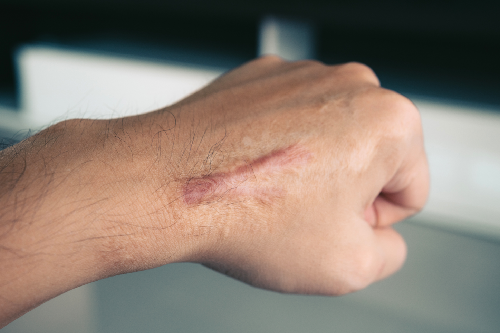
A keloid is a type of raised scar that occurs when the body overproduces collagen at the site of a wound or injury. Keloids are typically smooth and rubbery, and they can be pink, red, or purple in color. They can be itchy or painful, and they can grow beyond the boundaries of the original wound. Keloids are more common in people with dark skin, but they can occur in people of any race.
Keloids can form after any type of injury to the skin, including cuts, burns, piercings, or surgical incisions. They can also form spontaneously without an obvious cause. Keloids are benign, but they can cause cosmetic concerns and can interfere with movements, in some cases.
Treatment for keloids includes corticosteroid injections, cryotherapy, laser therapy, surgery, and pressure therapy.

Keloid scars typically have the following characteristics:
| Symptom | Description |
|---|---|
| Raised and Smooth | Keloids are usually raised above the surrounding skin and have a smooth, rubbery texture. |
| Colored | Keloids are typically pink, red, or purple in color. |
| Larger than the Original Wound | Keloids often grow beyond the boundaries of the original wound. |
| Itchy or Painful | Keloids can be itchy or painful to the touch. |
| Can Occur Anywhere | Keloids can form anywhere on the body, but they are more common on the chest, shoulders, earlobes, and face. |
| Sensitive to Pressure | Keloids can be sensitive to pressure and may be painful when wearing clothes or jewelry that rub against them. |
| Accompanied by Other Symptoms | Keloids may be accompanied by symptoms such as itching, burning, or tenderness. |
The exact cause of keloids is not fully understood, but it is believed to be related to the way the body heals from wounds or injuries. Keloids occur when the body overproduces collagen at the site of a wound or injury, resulting in a raised scar that grows beyond the boundaries of the original wound.
| Risk Factor | Details |
|---|---|
| Genetics | Keloids tend to run in families, suggesting a genetic component to the condition. |
| Darker Skin Tones | Keloids are more common in people with darker skin tones, but they can occur in people of any race. |
| Previous Keloid | If you have had a keloid before, you are more likely to develop another one. |
| Certain Types of Injuries | Keloids are more likely to occur after certain types of injuries, such as burns, piercings, or surgical incisions. |
| Hormonal Changes | Hormonal changes during pregnancy or adolescence may increase the risk of developing keloids. |
Treatment for keloid scars typically involves a combination of different therapies.
| Treatment | What It Does | Best For |
|---|---|---|
| Corticosteroid Injections | Injected directly into the keloid to reduce inflammation and shrink the size of the scar. | First-line treatment |
| Cryotherapy | Involves freezing the keloid with liquid nitrogen to reduce its size and soften the scar tissue. | Smaller keloids |
| Laser Therapy | Lasers can be used to reduce the redness and size of the keloid, as well as to improve the overall appearance of the scar. | Redness, size reduction |
| Surgery | Surgery can be used to remove the keloid, but it carries a risk of recurrence, so it is usually used as a last resort. | Severe keloids |
| Pressure Therapy | Involves applying pressure to the keloid with bandages or silicone gel sheets in order to reduce its size. | Prevention, flattening |
| Radiotherapy | Can be used to shrink the keloid scar, but it has a risk of causing skin cancer. | Resistant cases |
Important: Not all keloids respond to treatment, and some may require a combination of treatments to achieve the best results. It’s important to work with a board-certified dermatologist who has experience in treating keloids, and to follow their post-treatment instructions carefully to minimize the risk of recurrence.
The cost of keloid treatment depends on the treatment type, size, and number of sessions required.
| Service | Price |
|---|---|
| Corticosteroid Injections (per session) | Starting from ₹1,500 |
| Cryotherapy (per session) | Starting from ₹1,000 |
| Laser Therapy (per session) | Starting from ₹2,500 |
| Surgical Removal | Starting from ₹5,000 |
| Pressure Therapy (silicone sheets) | Starting from ₹1,000 |
| Package Pricing | Discounted rates available for multiple sessions |
*Final pricing is determined after your consultation with Dr. Asma, based on your specific needs and treatment plan.
Call us at 8002558860 for current pricing and to book your consultation.
While keloids cannot always be prevented, you can reduce your risk:
Dr. Asma Parveen is a renowned dermatologist with an MD in Dermatology and over 14 years of clinical experience. She is known for her honest approach, personalised treatment plans, and natural-looking results.
Keloids can be stubborn and may recur after treatment. Dr. Asma personally evaluates every patient and frequently combines treatments — such as corticosteroid injections with laser therapy or cryotherapy — for optimal results.


Indira Nagar
Thakurganj
A keloid is a raised scar that forms when the body overproduces collagen at the site of a wound or injury. Keloids grow beyond the boundaries of the original wound and can be pink, red, or purple.
No, keloids are not contagious. They are a result of the body’s healing process and cannot be spread from person to person.
No, keloids are benign (non-cancerous). However, they can cause cosmetic concerns and, in some cases, interfere with movement.
Keloids can be treated and reduced in size, but they may recur. Treatment focuses on flattening, softening, and reducing the appearance of the scar.
Treatment options include corticosteroid injections, cryotherapy, laser therapy, surgery, pressure therapy, and radiotherapy. A combination of treatments often gives the best results.


At The Velvet Skin Centre:
Your exact cost will be confirmed at consultation.
You can reduce your risk by avoiding unnecessary skin injuries, treating wounds promptly, using silicone gel sheets, and consulting a dermatologist early if you notice a scar growing.
Keloids have a high recurrence rate, especially after surgery alone. Combining treatments — such as surgery followed by corticosteroid injections or pressure therapy — significantly reduces the risk of recurrence.
Don’t let keloids affect your confidence. Book your consultation with Dr. Asma and experience personalised care with advanced treatment options.
Call us today at 8002558860 or fill out the form below to schedule your consultation and claim your 10% OFF on your first visit!
WhatsApp us