Understanding Acne Scars Before Starting Acne Scar Treatment in Lucknow
Acne scars can remain long after active acne has healed, affecting skin texture and self-confidence. At The Velvet Skin Centre, we provide personalized acne scar treatment in Lucknow using evidence-based dermatological procedures tailored to your skin type, scar pattern, and treatment goals.
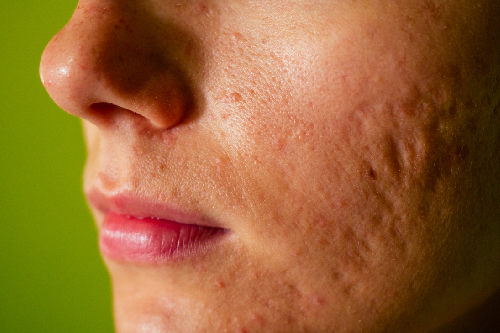
Acne scars are not the same as post-acne marks. Red or brown flat discolouration left after a pimple heals — known as post-inflammatory hyperpigmentation (PIH) — fades on its own over time and responds well to topical treatment. True acne scars, by contrast, are structural changes in the skin tissue and require clinical intervention to improve.
Identifying which type you have is the first thing Dr. Asma determines at your consultation — because the treatment that works for one will not work for the other.
If you are still experiencing active breakouts, controlling acne first gives significantly better scar treatment outcomes.
→ Active acne? See: Acne Treatment in Lucknow
Types of Acne Scars and Their Best Treatment Options
Understanding your scar type is the starting point for effective treatment. At The Velvet Skin Centre, Dr. Asma identifies scar type and depth before any procedure is selected.
1. Atrophic Scars (Depressed Scars) — Most Common
These form when the skin loses tissue during healing, creating a depression below the surrounding skin surface. There are three subtypes:
Ice Pick Scars
Narrow, deep pits that extend into the dermis — the most difficult atrophic scar to treat because of their depth. Best addressed with Fractional CO2 laser or TCA Cross (a targeted chemical reconstruction technique).
Boxcar Scars
Wide, shallow-to-medium depth depressions with defined, sharp edges. Respond well to Fractional CO2 laser, microneedling with PRP, and chemical peels depending on depth.
Rolling Scars
Broad, wave-like depressions with sloping edges caused by fibrous bands pulling the skin downward. Respond best to microneedling, subcision, and combination protocols.
2. Hypertrophic and Keloid Scars (Raised Scars) — Less Common
These form when the skin overproduces collagen during healing, creating a raised scar at or beyond the original wound boundary. Keloid scars extend beyond the original wound area.
Treated with intralesional corticosteroid injections, laser therapy, and in selected cases, silicone-based management.
Keloids are a more severe type of raised scar. They differ from hypertrophic scars because keloids grow larger than the original wound. They can send out increased lateral shoots that expand farther than the wound and continue developing long after the original wound has healed. Some people are more tending to develop keloids.
3. Post-Inflammatory Hyperpigmentation (PIH) — Not a True Scar
Flat red, pink, or brown marks left after a pimple heals. Not structural damage — fades with time and responds well to chemical peels, topical depigmenting agents, and Carbon Laser. Often confused with true acne scars.
Acne Scar Treatment in Lucknow at The Velvet Skin Centre
Treatment is matched to scar type, depth, skin tone (Fitzpatrick type), and the patient’s downtime tolerance. Indian skin (Fitzpatrick IV–V) requires specific parameter adjustments to avoid post-treatment hyperpigmentation — which Dr. Asma accounts for in every protocol.
1. Fractional CO2 Laser — Gold Standard for Atrophic Scars
Fractional CO2 is the most clinically established treatment for moderate- to-severe atrophic acne scars in Lucknow, and the primary procedure offered at The Velvet Skin Centre for pitted and textural scarring.
The laser creates thousands of microscopic treatment columns in the skin, removing damaged scar tissue and triggering the skin’s natural collagen remodelling response. As new collagen forms, depressed scars are lifted from within — improving both texture and overall skin surface.
Results continue to improve for up to 6 months post-treatment as collagen remodelling completes.
2. Microneedling with PRP — Collagen Induction for Milder Scars
Microneedling uses fine, controlled needles to create micro-injuries in the skin — stimulating the body’s natural healing and collagen production response. Combined with PRP (Platelet-Rich Plasma) derived from your own blood, the growth factors in the plasma accelerate tissue repair and enhance results.
3. Chemical Peels for Acne Scars
Medium-depth chemical peels — including TCA (Trichloroacetic Acid) and salicylic acid peels — exfoliate damaged skin layers, stimulate collagen, and reduce surface scarring and post-acne pigmentation simultaneously.
4. Carbon Laser (Spectra Laser) — Pigmentation and Open Pores
The Carbon Laser Peel is particularly effective for post-acne pigmentation, enlarged pores, and surface-level textural irregularities. It does not address deep structural scarring but is an excellent option for patients with PIH, oily skin, and mild surface unevenness as a standalone or adjunct treatment.
5. Dermal Fillers for Acne Scars
For specific depressed scars — particularly rolling scars and selected boxcar scars — injectable dermal fillers can temporarily lift the scar floor, producing immediate improvement in contour. Results last 6–12 months and can be combined with laser treatment for enhanced and longer-lasting outcomes.
6. Combined and Personalised Protocols
For patients with multiple scar types — which is the most common presentation — a combination protocol produces the best outcomes. Dr. Asma designs a sequenced treatment plan that addresses each scar type with the most appropriate modality, in the correct order, to maximise results and minimise downtime.
What to Expect During Your Acne Scar Treatment Consultation
Once you’ve identified the kind of acne scar(s) you have, you can start taking steps to prevent the construction of additional scars. Here are four manageable ways to prevent acne scars:
Which Acne Scar Treatment Is Right for You?
The ideal treatment depends on several factors, including:
- Type of acne scars
- Scar depth
- Skin type
- Presence of active acne
- Previous treatments
- Lifestyle and recovery preferences
Many patients benefit from combination therapy because different procedures target different aspects of acne scarring. Your dermatologist will recommend a treatment plan designed to achieve gradual, natural-looking improvement while minimizing downtime whenever possible.
Benefits of Acne Scar Treatment
Personalized acne scar treatment can provide several benefits, including:
- Improved skin texture
- Reduced appearance of acne scars
- Enhanced collagen production
- Smoother, more even-looking skin
- Better skin confidence
- Customized treatment for different scar types
- Long-term improvement with appropriate maintenance
Although complete scar removal is not always possible, significant improvement can often be achieved with a well-planned treatment approach.
Recovery and Aftercare
Recovery varies depending on the procedure performed. Mild redness, swelling, or sensitivity may occur temporarily after treatment.
To support optimal healing, patients are generally advised to:
- Use sunscreen daily
- Avoid excessive sun exposure
- Follow the prescribed skincare routine
- Avoid picking or scratching treated skin
- Keep the skin moisturized as advised
- Attend follow-up appointments
Your dermatologist will provide detailed aftercare instructions specific to your treatment to help maximize results and reduce the risk of complications.