Trust The Velvet Skin Centre for safe mole removal treatment. Our skin doctor ensures accurate diagnosis and effective care for healthy, blemish-free skin.
Dr. Asma Parveen, MBBS, MD Dermatology | 14+ Years Experience
⭐ 4.9 Google Rating | 1,800+ Reviews
Call to discuss your Moles, Treatment Options & Cost.
Schedule Your Dermatology Consultation.
Get expert skin and hair care advice.
Moles are typical. Most grownups have a couple of them. Adults with fair skin frequently have more moles. On their skin, they could have 10 to 40 moles. That is typical.
The majority of skin moles develop during childhood and adolescence. Moles will increase in size as the child (or teen) matures. While some moles will lighten, others will become darker. These changes are normal and rarely indicate melanoma, the most dangerous type of skin cancer.
Adults who develop new moles or see changes to their existing moles may have melanoma. Melanoma is very treatable if discovered early.
Moles develop when skin cells gather in one area of the skin rather than spreading out evenly. Melanocytes, which produce the pigment that gives your skin its unique colour, make up the majority of moles.
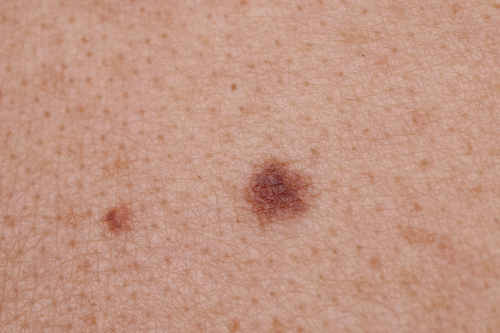
Moles are typically brown, although they can also be many sizes, forms, and colours.
| Characteristic | Description |
|---|---|
| Shape | They can be oval and round. |
| Color | Often flesh-colored, reddish brown, or medium to dark brown. |
| Size | The dimensions of moles can vary greatly. They might be as large as a pinhead or as little as an arm. They are often no longer than 6 millimetres (1/4 inch). |
| Surface | The surface of a mole may be elevated, wrinkly, flat, or smooth. |
They might have one colour and be flat at first, before becoming slightly elevated and changing colours. Some may sprout a tiny stalk and eventually fall off. Often, moles will disappear completely.
The majority of moles develop throughout childhood, up to the age of 20 or so, but they can continue to develop until middle age.
After the age of 20, moles should be shown to a doctor. Additionally, if a mole stings, burns, hurts, oozes, crusts, or changes abruptly in colour, elevation, size, or form, you should consult a physician.
Here are three details that can aid in early detection and treatment of melanoma:
Most moles don’t need to be treated. The following moles will be removed by a dermatologist:
A mole can typically be removed by a dermatologist during an office visit. Most removals only necessitate one office visit. On rare occasions, a patient can require additional care.
| Treatment | What It Does | Best For |
|---|---|---|
| Laser Removal | Uses laser energy to break down mole tissue | Small, benign, cosmetic moles |
| Surgical Excision | Cuts out the mole and stitches the skin | Suspicious moles, larger moles |
| Shave Removal | Shaves the mole flush with the skin | Raised, benign moles |
| Cryotherapy | Freezes the mole with liquid nitrogen | Small, benign moles |
Each procedure is tailored to ensure minimal scarring and maximum safety.
The cost of mole treatment depends on the removal method, size, and number of moles.
| Service | Price |
|---|---|
| Laser Removal (per mole) | Starting from ₹2,500 |
| Surgical Excision (per mole) | Starting from ₹3,000 |
| Shave Removal (per mole) | Starting from ₹2,000 |
| Cryotherapy (per mole) | Starting from ₹1,000 |
| Biopsy (if needed) | Starting from ₹2,000 |
| Package Pricing | Discounted rates available for multiple moles |
*Final pricing is determined after your consultation with Dr. Asma, based on your specific needs and treatment plan.
Call us at 8002558860 for current pricing and to book your consultation.
While moles cannot always be prevented, you can reduce your risk of melanoma:

Dr. Asma Parveen is a renowned dermatologist with an MD in Dermatology and over 14 years of clinical experience. She is known for her honest approach, personalised treatment plans, and natural-looking results.
Mole removal requires accurate diagnosis to distinguish benign moles from potentially cancerous ones. Dr. Asma personally evaluates every mole and recommends the safest, most appropriate removal method.


Indira Nagar
Thakurganj
Moles are common skin growths that develop when melanocytes (pigment-producing cells) cluster together. Most adults have 10–40 moles, which can be brown, flesh-colored, or reddish-brown.
Most moles are harmless. However, some moles can develop into melanoma, a serious form of skin cancer. Regular skin checks and early detection are key.
You should get a mole checked if it changes in size, shape, or colour, or if it stings, burns, itches, bleeds, oozes, or crusts. Follow the ABCDE rule for melanoma detection.
Mole removal options include laser removal, surgical excision, shave removal, and cryotherapy. The best method depends on the mole’s size, location, and whether it’s suspicious.
Mole removal may leave a minor scar, but Dr. Asma uses techniques that minimise scarring. Proper aftercare can further reduce scar appearance.
At The Velvet Skin Centre:

Your exact cost will be confirmed at consultation.
Yes, many people choose to remove moles for cosmetic reasons, especially if they are bothersome or unattractive. A dermatologist can remove them safely.
Moles cannot be prevented, but you can reduce your risk of melanoma by protecting your skin from sun exposure, avoiding tanning beds, and checking your skin regularly.
Don’t let moles affect your comfort or confidence. Book your consultation with Dr. Asma and experience safe, effective removal with minimal scarring.
Call us today at 8002558860 or fill out the form below to schedule your consultation and claim your 10% OFF on your first visit!
WhatsApp us