

Platelet-Rich Plasma (PRP) has become one of the most widely discussed regenerative treatments in dermatology. Today, it is used to support a range of concerns, from hair thinning and skin rejuvenation to selected acne scar treatments. However, many people are unsure about what PRP actually does, who it may benefit, and when it is the right treatment choice.
Unlike treatments designed for a single concern, PRP can be adapted for different dermatological conditions.PRP is not used in exactly the same way for every condition. Its role differs according to the concern being treated, making a proper understanding of its applications an important part of choosing the most appropriate treatment.
PRP has become one of the most versatile regenerative treatments in dermatology, but its role varies depending on the condition being treated. Whether the goal is supporting hair restoration, improving skin quality, or complementing acne scar treatment, the approach should always be personalised. At The Velvet Skin Centre, Dr. Asma Parveen (MD Dermatology) recommends PRP only after carefully assessing the skin or scalp condition, treatment goals, and overall suitability for the procedure.
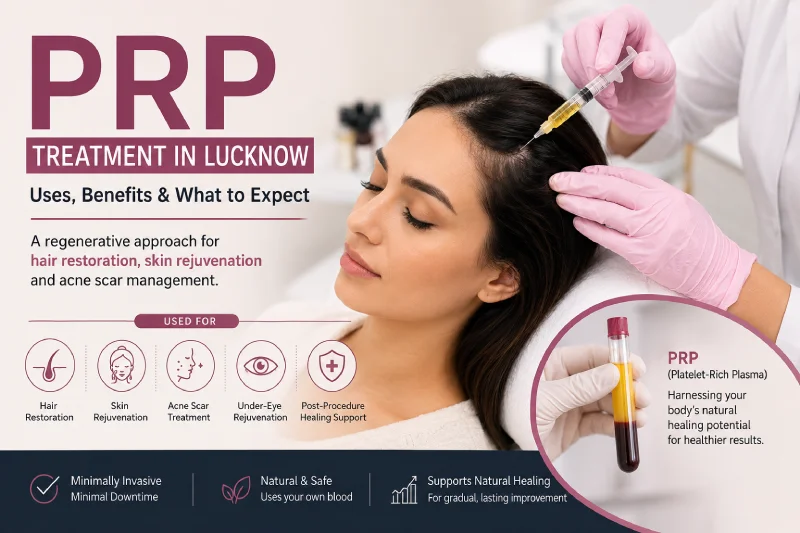
Understanding PRP Treatment
PRP (Platelet-Rich Plasma) is prepared from a small sample of your own blood. After processing, the platelet-rich portion is separated and used as part of a dermatologist-planned treatment. Because PRP uses your own biological material, it has become a widely used regenerative option in modern dermatology for selected skin and hair concerns.
Where Can PRP Be Used in Dermatology?
PRP is used in several areas of dermatology, with the treatment approach tailored to the condition being addressed.
| Treatment Area | How PRP May Be Used |
| Hair thinning and hair loss | Supports selected hair restoration treatments |
| Skin rejuvenation | May improve overall skin quality and collagen support |
| Acne scars | Often combined with microneedling or Fractional CO₂ Laser |
| Under-eye rejuvenation | Used in carefully chosen cases following a dermatologist’s evaluation |
| Post-procedure healing | Sometimes used to support recovery after selected dermatological procedures |
PRP for Hair Restoration
PRP for hair is commonly used as part of a non-surgical approach for selected types of hair thinning and hair loss. It may support healthier hair growth when incorporated into a personalised treatment plan. Since the underlying cause of hair loss differs from person to person, a detailed scalp evaluation is essential before recommending PRP.
PRP for Skin Rejuvenation
In aesthetic dermatology, PRP (for skin rejuvenation/vampire facial) is used to support healthier-looking skin by encouraging the skin’s natural repair processes. It may be considered for concerns such as early fine lines, dull skin, uneven texture, and reduced skin firmness. Rather than changing facial features, the focus is on improving overall skin quality over time.
PRP for Acne Scar Management
PRP may also be incorporated into acne scar treatment plans, particularly alongside procedures such as Microneedling, MNRF, or Fractional CO₂ Laser. In these cases, PRP is generally used as a supportive treatment rather than a standalone solution, with the overall plan tailored to the type and severity of acne scars.
Related Reading: Laser Treatment for Acne Scars in Lucknow
PRP vs Other Regenerative Treatments
Several regenerative treatments are available today, each serving a different purpose. Choosing the right option depends on your skin or hair concerns rather than following trends.
| Treatment | Commonly Considered For | How It Differs |
| PRP Treatment | Hair restoration, skin rejuvenation, acne scar support | Uses platelet-rich plasma prepared from your own blood |
| Skin Boosters | Skin hydration and improved elasticity | Primarily focus on restoring hydration |
| Salmon DNA Facial (Rejuran) | Skin regeneration and barrier repair | Uses polynucleotides (PN/PDRN) to support skin quality |
| Microneedling | Uneven skin texture and mild acne scars | Stimulates collagen through controlled micro-injuries |
| Fractional CO₂ Laser | Moderate to deep acne scars and skin resurfacing | Uses laser energy to remodel collagen and improve skin texture |
No single treatment is ideal for every concern. In some cases, your dermatologist may recommend combining treatments to achieve the most appropriate outcome.
Who May Consider PRP Treatment?
PRP may be considered for individuals who:
- Experience early hair thinning or reduced hair density.
- Want to improve overall skin quality and skin texture.
- Are undergoing selected acne scar treatments as part of a combination approach.
- Prefer regenerative treatments that use their own biological material.
- Are looking for gradual, natural-looking improvements rather than dramatic cosmetic changes.
A dermatologist consultation is the best way to determine whether PRP is suitable for your specific concerns or whether another treatment may be more appropriate.
Dermatologist’s Perspective
PRP has become increasingly popular, but it is not the right choice for every skin or hair concern. In clinical practice, treatment decisions are based on diagnosis rather than trends.
For example, hair thinning caused by nutritional deficiencies may require medical management, while certain acne scars may respond better to procedures such as Fractional CO₂ Laser or Microneedling. PRP is recommended only when it is likely to contribute meaningfully to the overall treatment plan.
Common Myth vs Fact
Myth: PRP works equally well for every type of hair loss and skin concern.
Fact: PRP has specific applications in dermatology. Whether it is recommended depends on the diagnosis, severity of the condition, treatment goals, and an individual clinical assessment. In some cases, other treatments—or a combination of treatments—may provide more suitable outcomes.
Quick Take
| Treatment Type | Regenerative dermatology treatment |
| Common Uses | Hair restoration, skin rejuvenation, supportive acne scar care |
| Downtime | Usually minimal |
| Approach | Personalised according to the condition being treated |
| Recommended After | Dermatologist evaluation |
Treatment Selection Matters
Although PRP is widely used in dermatology, it is not intended to replace every treatment.
For example:
- Individuals with hair thinning may benefit from PRP alongside medical therapies, depending on the diagnosis.
- Those seeking skin rejuvenation may be better suited to PRP, Skin Boosters, or Salmon DNA Facial depending on their skin quality and treatment goals.
- Patients with moderate to deep acne scars often require procedures such as Fractional CO₂ Laser or Microneedling, with PRP used as a supportive treatment in selected cases.
Choosing the right treatment is not about selecting the newest option—it’s about selecting the most appropriate one.
Choosing the Right PRP Treatment Starts with the Right Diagnosis
Although PRP is used across different dermatology treatments, it is not performed in the same way for every patient. Factors such as the underlying diagnosis, severity of the concern, previous treatments, and overall treatment goals all influence whether PRP is appropriate and how it may be incorporated into a personalised care plan.
A detailed dermatologist evaluation helps ensure that treatment decisions are based on clinical needs rather than assumptions, leading to a more focused and individualised treatment strategy.
Final Insight
PRP treatment has become an important part of regenerative dermatology because it can support a range of skin and hair concerns when used appropriately. However, its effectiveness depends on selecting the right patients, the right indications, and, when needed, combining it with other dermatological treatments.
Understanding what PRP can—and cannot—do is the first step towards choosing a treatment plan that aligns with your individual needs and expectations.
Consultation & Next Step
If you’re considering PRP treatment for hair restoration, skin rejuvenation, or acne scar management, a professional consultation can help determine whether it is the right option for you.
At The Velvet Skin Centre, every PRP treatment plan is tailored after a detailed evaluation of your skin or scalp condition, treatment goals, and overall suitability.
Book Your Consultation
Call us: 800255886
Visit us at our two convenient locations:
Indira Nagar: The Velvet Skin Centre, Amrapali Market, 23, B Block, Indira Nagar, Lucknow, Uttar Pradesh 226016
Thakurganj: The Velvet Skin Centre, Near Ghante Wala Sweets, Thakurganj, Daulatganj, Lucknow, Uttar Pradesh 226003
Frequently Asked Questions
- Is PRP treatment only used for hair loss?
No. PRP is also used in dermatology for skin rejuvenation and may be incorporated into selected acne scar treatment plans, depending on the individual’s condition and treatment goals.
- Is PRP treatment safe?
Since PRP is prepared from your own blood, it is generally considered a well-tolerated procedure when performed by a qualified dermatologist using appropriate medical protocols.
- Can PRP be combined with other dermatology treatments?
Yes. Depending on the concern being treated, PRP may be combined with treatments such as Microneedling, Fractional CO₂ Laser, or other dermatologist-recommended procedures.
- How long does a PRP session usually take?
The duration varies depending on the treatment area, but most PRP appointments are completed within 45 to 60 minutes, including preparation time.
- Does PRP provide immediate results?
PRP supports the body’s natural repair processes, so improvements typically develop progressively over time rather than immediately after treatment.
- What influences the cost of PRP treatment?
The overall cost depends on factors such as the treatment area, the condition being treated, whether PRP is performed alone or alongside other procedures, and the recommended treatment plan.
- How do I know if PRP is right for me?
A dermatologist consultation is the best way to determine whether PRP is suitable for your condition. Your medical history, diagnosis, and treatment goals all play an important role in selecting the most appropriate approach.