

Why Traditional Hair Removal Fails PCOS Women (And What Works Instead)
Polycystic Ovary Syndrome (PCOS) affects approximately 5-10% of women of reproductive age worldwide. Among its various symptoms, hirsutism (excessive facial and body hair growth) is one of the most psychologically challenging aspects of the condition. For many women, laser hair removal has emerged as a viable long-term management option alongside comprehensive PCOS care.
Understanding PCOS-Related Hair Growth
Women with PCOS typically have elevated levels of androgens (male hormones), which stimulate hair growth in areas where women usually have minimal hair. This results in coarse, dark hair on the face, chin, neck, chest, abdomen, and back. Many women describe feeling like they must constantly monitor and hide this unwanted hair growth, leading to daily routines centered around concealment, avoidance of certain activities or clothing, and persistent worry about how others perceive them.
How Laser Hair Removal Works
The laser treatment process works by directing precise wavelengths of light toward the pigment within individual hair shafts. When this light energy reaches the follicle, it converts to heat, disrupting the cellular structures responsible for hair production. Since only about 20-25% of hair follicles are actively producing hair at any given time, treatments must be spaced several weeks apart to catch different follicles as they enter their growth phase. This staggered approach explains why a series of sessions is necessary to achieve optimal hair reduction.
Most Effective For:
- Dark, coarse hair (typical in PCOS-related hirsutism)
- Various body areas including face, chest, abdomen, and limbs
- Individuals seeking long-term hair reduction
Potential Benefits for PCOS Patients
- Hair Reduction: Studies show significant reduction in hair thickness and density over multiple sessions, though complete permanent removal may not always be achievable.
- Skin Improvement: May reduce issues like razor bumps, ingrown hairs, and irritation from frequent hair removal methods.
- Convenience: Reduces the need for frequent temporary hair removal methods.
- Psychological Benefits: Many women report improved self-confidence and reduced anxiety related to unwanted hair growth.
Important Considerations and Limitations
Effectiveness Varies
- Results depend on individual factors including hormone levels, hair color, skin type, and genetic factors
- Hormonal fluctuations in PCOS can affect treatment outcomes
- Some women may experience regrowth requiring maintenance treatments
Potential Side Effects
- Temporary redness and swelling (common)
- Skin discoloration (rare, more common in darker skin tones)
- Burns or scarring (very rare when performed properly)
- Paradoxical hair growth increase (rare)
Cost Considerations
- Treatment costs vary widely ( Rs.2000- Rs.15000)+ per session depending on area and location)
- Initial treatment series often extends longer than other patients due to the hormonal nature of PCOS hair growth
- Maintenance sessions may be needed long-term
Laser Types and Skin Compatibility
The choice of laser technology depends on the interaction between your skin’s melanin content and the coarse hair typical in PCOS:
- 755nm Alexandrite systems penetrate effectively when there’s strong contrast between light skin and dark hair, making them efficient for fair-skinned patients with the thick, pigmented hair common in hormonal conditions
- 810nm Diode technology offers deeper penetration with adjustable pulse durations, allowing practitioners to customize treatment for the variable hair thickness often seen across different body areas in PCOS patients
- 1064nm Nd:YAG wavelengths can safely bypass surface melanin in darker skin while still reaching deeper follicles, though the reduced melanin absorption may necessitate higher energy settings or additional sessions for hormonal hair patterns
A qualified dermatologist should assess your individual characteristics to determine the most appropriate laser type and settings.
Treatment Process and Expectations
- Session Duration: 10-60 minutes depending on treatment area
- Sensation: The intensity varies with hair density and hormonal thickness – areas with PCOS-related coarse growth may feel more intense as the laser works harder to penetrate thicker follicles. Most patients describe it as brief, sharp heat pulses that subside immediately after each laser pulse.
- Treatment Schedule: Sessions are timed to coincide with natural hair growth cycles, though hormonal fluctuations in PCOS can sometimes extend the intervals between treatments as your provider monitors how your follicles respond.
- Recovery Period: Most patients can return to normal activities immediately, though the treated skin may appear slightly flushed similar to mild sunburn, which typically fades within 24-48 hours.
Pre and Post-Treatment Guidelines
Before Treatment:
- Shave (don’t wax or pluck) the area 24-48 hours prior
- Avoid sun exposure for 4-6 weeks before treatment
- Inform your provider about medications and skincare products
- Avoid other hair removal methods that remove the hair root for 4-6 weeks
After Treatment:
- Apply cool compresses or aloe vera for comfort
- Use broad-spectrum sunscreen daily
- Avoid hot baths, saunas, and intense exercise for 24-48 hours
- Don’t pick at or exfoliate treated areas
Safety for Facial Treatment
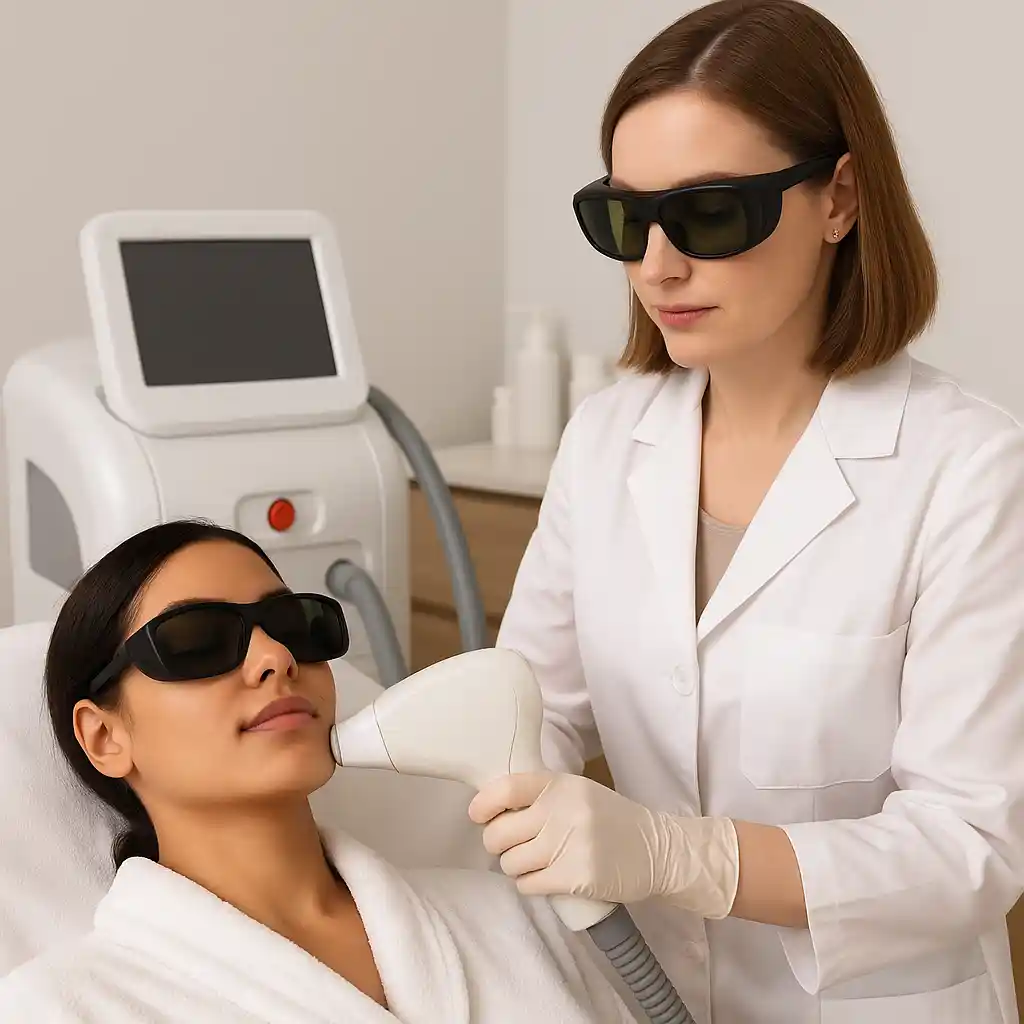
When performed by qualified professionals using appropriate equipment, laser hair removal is generally safe for facial areas commonly affected by PCOS, including the upper lip, chin, and neck. Practitioners must carefully adjust laser settings near the orbital area, and both patient and technician wear wavelength-specific protective shields throughout the procedure.
Comparing Hair Removal Methods
| Method | Advantages | Disadvantages | Best For |
| Laser | Long-term reduction, fewer ingrown hairs | Multiple sessions, higher cost, not effective on all hair types | Those seeking long-term solution with dark, coarse hair |
| Waxing | Removes hair from root, temporary smoothness | Painful, temporary results, potential for ingrowns | Quick temporary solution |
| Shaving | Quick, inexpensive, convenient | Daily maintenance, potential irritation | Immediate temporary needs |
| Electrolysis | Can be permanent, works on all hair colors | Very time-consuming, best for small areas | Small areas, light or fine hair |
The Importance of Comprehensive PCOS Management
While laser hair removal can effectively manage hirsutism symptoms, it’s important to address PCOS holistically. Consider working with healthcare providers to:
- Evaluate hormonal balance and consider medical treatments if appropriate
- Implement lifestyle modifications (diet, exercise, stress management)
- Monitor for other PCOS-related health risks
- Coordinate laser treatment with overall PCOS management plan
Hormonal treatments such as oral contraceptives, anti-androgens, or insulin-sensitizing medications may enhance and prolong laser hair removal results by addressing the underlying cause of excess hair growth.
Choosing a Provider
Since PCOS creates unique hair growth patterns that differ from typical cosmetic laser patients, your provider selection becomes particularly important. Prioritize clinics that demonstrate:
- Board-certified dermatologists or qualified medical professionals
- Experience treating hormonal hair growth patterns
- FDA-approved laser equipment
- Comprehensive consultation including medical history review
- Realistic expectations about outcomes
- Clear pricing and treatment plans
Financial Planning
- Research package deals and payment plans offered by reputable clinics
- Consider the long-term cost comparison with temporary methods
- Check if your employer’s flexible spending account (FSA) covers treatments
- Some medical laser treatments may be tax-deductible if prescribed for medical rather than cosmetic reasons
Is It Right for You?
Laser hair removal may be a good option if you:
- Have dark, coarse hair typical of PCOS-related hirsutism
- Are committed to multiple treatment sessions
- Have realistic expectations about outcomes
- Are managing PCOS comprehensively with healthcare providers
- Find temporary hair removal methods inadequate or problematic
Conclusion
Laser hair removal can be an effective component of managing PCOS-related hirsutism, offering significant hair reduction and improved quality of life for many women. However, it’s most successful when viewed as part of comprehensive PCOS management rather than a standalone solution.
The key to success lies in choosing qualified providers, having realistic expectations, and continuing to work with healthcare professionals to address the underlying hormonal aspects of PCOS. While not a cure for the condition itself, laser hair removal can provide meaningful relief from one of its most visible and psychologically challenging symptoms.
Before beginning treatment, consult with both your PCOS healthcare provider and a qualified laser specialist to develop a treatment plan that aligns with your overall health management strategy.
Ready to Transform Your PCOS Journey?
If you’re tired of the endless cycle of temporary hair removal methods, The Velvet Skin Centre is here to provide the specialized care you deserve. Our expert dermatology team understands the unique challenges of PCOS-related hair growth and uses cutting-edge laser technology specifically calibrated for hormonal hair patterns.
Book your personalized consultation today and discover:
- Your customized treatment plan based on your specific hair growth patterns
- The optimal laser technology match for your skin tone and hair type
- How our approach integrates seamlessly with your existing PCOS care
- Transparent, upfront pricing with realistic timeline expectations
- Ongoing support throughout your treatment journey
Visit The Velvet Skin Centre
Indira Nagar: The Velvet Skin Centre, 23, Amrapali Market, B Block, Indira Nagar, Lucknow, Uttar Pradesh 226016
Thakurganj: The Velvet Skin Centre, Near Ghante Wala Sweets, Thakurganj, Daulatganj, Lucknow, Uttar Pradesh 226003
📞 Call : 8002558860
🗺️ Find Us: Laser Hair Removal Lucknow
Take the first step toward lasting freedom from unwanted hair. Your confidence transformation starts with just one call.