

Are you wondering, can PRP regrow hair? Hair thinning and progressive hair fall affect confidence across age groups and often create uncertainty about which medical treatments truly work. Ongoing hair loss, visible scalp thinning, and limited improvement from home remedies raise concerns about safety, effectiveness, and long-term results.
PRP hair treatment uses the body’s own biological components rather than synthetic substances or surgical intervention. PRP stands for Platelet-Rich Plasma. Dermatologists use this treatment to support hair density, slow active hair loss, and improve scalp health when hair follicles remain viable. Outcomes depend on the stage of hair loss, scalp condition, and consistency of treatment.
This blog explains whether PRP regrow hair outcomes are realistic, how the treatment works, who it benefits, and what to expect based on dermatology practice and clinical evidence.
What PRP Hair Treatment Involves?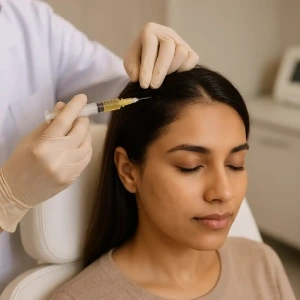
PRP hair treatment starts with collecting a small blood sample from the patient. This sample is processed using a centrifuge to separate platelet-rich plasma, which contains concentrated growth factors involved in tissue repair and cellular activity.
The prepared platelet-rich plasma is injected into specific scalp areas affected by thinning or reduced hair density. A trained dermatologist performs the procedure under sterile conditions to ensure safety and precision.
PRP does not introduce synthetic substances or implants. The treatment works through biological stimulation to support existing hair follicles and improve overall scalp health.
How PRP Supports Hair Regrowth
Hair growth follows a cycle that includes active growth, rest, and shedding phases. In many forms of hair loss, hair follicles remain present but function poorly or stay inactive for extended periods.
PRP delivers concentrated growth factors directly into the scalp, which helps improve follicular activity and scalp health. These growth factors support:
- Improved blood circulation around hair follicles
- Activation of weakened or dormant follicles
- Strengthening of existing hair roots
- Extension of the active hair growth phase
Dermatology research shows these growth factors positively influence follicular function and the scalp micro-environment when administered correctly and consistently under medical supervision.
Can PRP Regrow Hair or only Slow Hair Loss
PRP does not create new hair follicles. Humans are born with a fixed number of follicles, and PRP supports follicles that still exist but function poorly or remain inactive.
PRP regrow hair outcomes occur when follicles remain alive but inactive. In such cases, PRP helps improve hair thickness, density, and visible growth. When follicles are completely destroyed, such as in advanced baldness or scarring conditions, PRP does not produce regrowth.
Dermatologists consider PRP a regenerative treatment that supports existing follicles rather than a replacement therapy for lost follicles.
Who is Suitable for PRP Treatment for Hair Loss?
PRP hair treatment shows better outcomes in early to moderate stages of hair loss. Individuals with thinning hair, reduced density, or increased hair shedding respond more favorably than those with long-standing bald areas where follicles are no longer active, which aligns with clinical observations seen in PRP treatment for hair loss.
PRP often supports improvement in:
- Androgenetic alopecia in men and women
- Stress-related hair fall
- Post-pregnancy hair thinning
- Hair loss linked to nutritional imbalance
PRP does not work effectively for advanced baldness with smooth scalp areas, scarring alopecia, or untreated medical causes such as uncontrolled hormonal disorders. A detailed dermatology evaluation remains essential before treatment planning to ensure realistic expectations and appropriate care.
PRP Hair Treatment Results Timeline and the Role of Consistency
PRP does not produce instant hair regrowth. Improvement follows natural hair growth cycles and requires time and consistency.
Reduced hair fall often appears within the first few weeks after treatment begins. Improvements in hair texture and thickness develop over the following months. Visible gains in hair density usually require multiple sessions.
A standard treatment plan includes:
- Three to four initial sessions
- Sessions spaced three to four weeks apart
- Maintenance sessions every six to twelve months
Consistency plays a central role in sustaining results and supporting long-term scalp and hair health.
PRP Effectiveness Compared with Other Hair Loss Treatments
PRP effectiveness varies based on treatment quality and individual scalp health, and understanding how it compares with other hair loss treatments helps set realistic expectations.
| Aspect | PRP Hair Treatment | Oral or Topical Treatments |
| How it works | Delivers growth factors directly to the scalp to stimulate existing hair follicles and improve scalp health. | Works through surface application or systemic action to influence hair growth pathways. |
| Results | Improves hair thickness and density when performed under medical supervision. | Results depend on consistent daily use and often decline after stopping treatment. |
| Hormonal impact | Does not alter hormone levels. | Some treatments affect hormonal pathways. |
| Compliance | Requires scheduled sessions rather than daily application. | Requires long-term daily use. |
| Safety | Uses the patient’s own blood with low allergy risk. Temporary redness or scalp tenderness may occur. | Side effects vary depending on formulation and individual tolerance. |
| Role after transplant | Supports scalp recovery and graft survival. | Limited role in post-transplant recovery. |
Takeaway
Can PRP regrow hair? PRP hair treatment supports hair regrowth by strengthening existing follicles and improving overall scalp health. It does not create new follicles, yet it helps reactivate dormant ones and slow progressive hair loss when started at the right stage. Results depend on hair loss severity, treatment consistency, and medical expertise. PRP offers a regenerative, non-surgical option for individuals seeking scientifically guided hair restoration with realistic expectations and long-term planning.
Get Expert Dermatology Guidance for PRP Hair Treatment
If hair thinning or hair fall affects your confidence, a professional dermatology evaluation helps determine whether PRP suits your condition. For personalized assessment and treatment planning, call +91 8002558860 to book a consultation or visit The Velvet Skin Centre at 23, Amrapali Market, B Block, Indira Nagar, Lucknow, Uttar Pradesh 226016, where medically guided hair treatments focus on safety, effectiveness, and long-term scalp health.
FAQs
Can PRP regrow hair permanently?
PRP does not provide permanent regrowth in isolation. It supports existing hair follicles and slows the progression of hair loss. Maintenance sessions are required to sustain results, especially in genetic or progressive hair loss conditions.
How many PRP sessions are needed for hair regrowth?
Most treatment plans include three to four initial sessions spaced a few weeks apart. Maintenance sessions every six to twelve months help sustain hair thickness and density and reduce hair fall over time.
Is PRP hair treatment safe?
PRP is considered safe when performed under medical supervision. It uses the patient’s own blood, which lowers allergic risk. Mild redness, swelling, or scalp tenderness may occur and usually resolve quickly.
Who should avoid PRP hair treatment?
PRP does not suit individuals with advanced baldness, scarring alopecia, or untreated medical conditions such as uncontrolled hormonal disorders. Dermatology evaluation helps determine suitability and prevent unrealistic expectations.
When will visible results appear after PRP hair treatment?
Reduced hair fall often appears within a few weeks. Improvements in texture and thickness develop over several months. Visible density changes usually require multiple sessions and consistent follow-up care. Read more here.
Why is winter the best time for PRP treatment?
Winter offers lower sun exposure, reduced sweating, and better scalp recovery conditions, which support improved treatment tolerance and consistency. These factors make outcomes more predictable during PRP treatment in winter, especially when sessions follow a planned schedule.