

Hair thinning and hair fall are among the most common concerns seen in dermatology clinics today. While shampoos, oils, and supplements are widely used, many individuals look for treatments that address the biological cause of hair loss rather than just surface symptoms.
One treatment that has gained attention in recent years is Platelet-Rich Plasma (PRP) Hair therapy.
At The Velvet Skin Centre, with clinics in Indira Nagar and Thakurganj, Dr. Asma Parveen, a dermatologist with over 14 years of clinical experience, evaluates patients with pattern hair loss, stress-related shedding, and thinning scalp density to determine whether PRP therapy is an appropriate option.
This article explains the science behind PRP, how it works inside the scalp, and what results can realistically be expected.
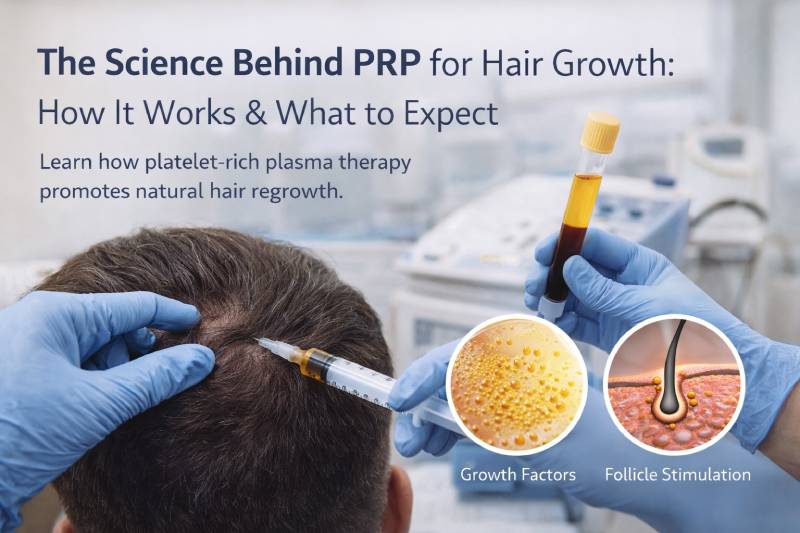
What Is PRP?
PRP stands for Platelet-Rich Plasma. It is derived from your own blood.
Blood contains:
- Red blood cells
- White blood cells
- Plasma
- Platelets
Platelets are known for their role in wound healing and tissue repair. They contain growth factors that help stimulate cell regeneration.
In PRP therapy:
- A small amount of blood is drawn.
- It is processed in a centrifuge.
- The platelet-rich portion is separated.
- The concentrated plasma is injected into targeted areas of the scalp.
Because PRP is derived from your own body, it is considered a regenerative, biologically compatible treatment.
How PRP Promotes Hair Growth
PRP does not “create” new hair follicles. Instead, it works by improving the environment around existing follicles.
1. Activation of Growth Factors
Platelets release growth factors that:
- Support cellular repair
- Stimulate tissue regeneration
- Encourage hair follicles to remain in the growth (anagen) phase longer
This helps improve hair density over time.
2. Reactivating Dormant Follicles
In early and moderate hair loss, many follicles are not dead — they are miniaturized or inactive.
PRP may help:
- Improve follicle activity
- Enhance follicular strength
- Slow progressive thinning
3. Improving Blood Circulation
Hair follicles require oxygen and nutrients to function properly.
PRP supports:
- Better scalp microcirculation
- Improved nutrient delivery
- Healthier follicular environment
4. Supporting Scalp Health
A healthy scalp is essential for sustained hair growth.
PRP contributes to:
- Improved scalp tissue quality
- Reduced inflammation in some cases
- Strengthening of surrounding skin structure
Who Is PRP Most Suitable For?
PRP is commonly considered for:
- Male pattern hair loss (androgenetic alopecia)
- Female pattern thinning
- Stress-related shedding (telogen effluvium, after evaluation)
- Early-stage hair density reduction
- Post-illness hair thinning
PRP is generally not effective for completely bald areas where follicles are no longer present.
What Happens During a PRP Session?
A typical PRP session includes:
- Clinical Assessment: Hair density, scalp health, and hair loss patterns are evaluated.
- Blood Collection: A small sample of blood is drawn.
- Centrifugation: The sample is processed to isolate platelet-rich plasma.
- Scalp Injection: PRP is injected into areas of thinning using fine needles. The procedure usually takes 45–60 minutes.
How Many Sessions Are Needed?
Most patients require:
- 3–4 initial sessions
- spaced 4–6 weeks apart
- followed by maintenance sessions every 6–12 months (if needed)
Results typically become noticeable after a few months, as hair growth cycles gradually respond.
Hair improvement is progressive — not immediate.
Is PRP Safe?
PRP is generally considered safe because:
- It uses your own blood
- It is minimally invasive
- No surgical incisions are involved
Temporary effects may include:
- Mild scalp soreness
- Slight redness
- Temporary swelling
These usually resolve within 24–48 hours.
PRP vs Other Hair Treatments
PRP differs from:
- Hair transplant surgery (which relocates follicles)
- Oral medications (which influence hormones)
- Topical solutions (which act externally)
PRP focuses on biological stimulation and regenerative support.
In some cases, dermatologists may combine PRP with other treatments depending on hair loss severity.
When Should You Consider PRP?
You may consider a professional evaluation if you notice:
- Gradual thinning at the crown
- Receding hairline
- Increased shedding during washing
- Visible scalp through hair
- Reduced hair density over time
Early intervention generally leads to better outcomes.
Final Thought
PRP therapy works by supporting the scalp’s natural regenerative processes. It does not replace lost follicles but may strengthen existing ones and improve hair thickness when started at the right stage.
Hair restoration requires realistic expectations, proper diagnosis, and structured planning.
Considering PRP for Hair Thinning?
If you are experiencing ongoing hair fall or reduced hair density, a clinical scalp evaluation can help determine whether PRP is appropriate for your condition.
Consultation allows you to:
- Understand the cause of your hair loss
- Assess suitability for PRP
- Plan session frequency safely
- Avoid unnecessary treatments
For consultation or enquiries: 8002558860
Book an Appointment Now
Visit our clinic:
Visit our clinic:
The Velvet Skin Centre, Lucknow
Dermatologist: Dr. Asma Parveen
14+ years clinical experience | 5,000+ patients guided
Phone: 8002558860
Indira Nagar: The Velvet Skin Centre, 23, Amrapali Market, B Block, Indira Nagar, Lucknow
Thakurganj: The Velvet Skin Centre, Near Ghante Wala Sweets, Thakurganj, Daulatganj, Lucknow, Uttar Pradesh 226003
Frequently Asked Questions About PRP for Hair Growth
- How long does it take to see results after PRP treatment?
Initial improvements such as reduced hair fall may be noticed within 4–6 weeks. Visible improvement in hair thickness and density usually develops gradually over 3–6 months, depending on the individual’s hair growth cycle.
- Is PRP treatment painful?
Most patients describe PRP injections as mildly uncomfortable rather than painful. A numbing cream may be applied before the procedure to improve comfort.
- How long do PRP results last?
Results vary depending on the type and progression of hair loss. Maintenance sessions are commonly recommended every 6–12 months to sustain results.
- Can PRP regrow hair in completely bald areas?
PRP works best in areas where hair follicles are still present but weakened. It is generally not effective for completely bald areas where follicles are no longer active.
- Is PRP safe for both men and women?
Yes. PRP is suitable for both men and women experiencing pattern hair thinning or early-stage hair loss, provided they are medically evaluated before treatment.
The Velvet Skin Centre – Indira Nagar
The Velvet Skin Centre – Thakurganj