

Hair Loss and PRP Therapy: Understanding a Regenerative Approach
Hair thinning and increased hair shedding can occur due to genetics, hormonal changes, stress, nutritional deficiencies, medical conditions, and lifestyle factors. While many products claim to reverse hair loss, successful treatment often depends on identifying the underlying cause and choosing the right approach at the right stage.
One treatment that continues to attract attention in dermatology is PRP (Platelet-Rich Plasma) Hair therapy. PRP for hair loss is designed to support existing hair follicles and improve the scalp environment using growth factors derived from the patient’s own blood.
At The Velvet Skin Centre, with clinics in Indira Nagar and Thakurganj, Lucknow, patients receive personalized hair restoration plans under the guidance of Dr. Asma Parveen (MD Dermatology), a dermatologist with over 14 years of experience and 5000+ patients treated. Every treatment plan begins with a detailed scalp analysis and medical evaluation to determine suitability and realistic expectations.

What Is PRP Therapy for Hair Loss?
PRP stands for Platelet-Rich Plasma.
Platelets are naturally present in blood and contain growth factors involved in tissue repair and healing. In PRP therapy, a concentrated portion of these platelets is prepared and introduced into targeted areas of the scalp.
PRP for hair treatment is commonly used to support:
- Hair follicle activity
- Scalp health
- Hair thickness
- Hair growth cycles
- Reduction in excessive shedding in selected cases
It is important to understand that PRP does not create new follicles where none exist. Instead, it aims to support existing follicles and improve their function.
Why PRP for Hair Loss Continues to Be Popular
Interest in PRP for hair growth has increased because it is a non-surgical treatment that focuses on supporting natural hair growth processes.
Many individuals explore PRP when they notice:
- Increased hair fall
- Widening scalp partitions
- Thinning at the crown
- Receding hairlines
- Reduced hair density
When used in appropriate candidates, PRP may become part of a structured hair restoration plan that includes medical treatment, nutritional evaluation, and scalp care.
How PRP Hair Treatment Is Performed
PRP hair treatment is usually completed in a series of structured steps.
Step 1: Consultation and Scalp Assessment
The process begins with a detailed evaluation of:
- Hair loss pattern
- Scalp condition
- Medical history
- Nutritional status
- Hormonal factors (when relevant)
Step 2: Blood Collection
A small amount of blood is collected, similar to a routine blood test.
Step 3: PRP Preparation
The blood sample is processed in a centrifuge to separate platelet-rich plasma from other blood components.
Step 4: PRP Application
The prepared PRP is injected into targeted areas of the scalp using fine needles.
The goal is to deliver concentrated growth factors close to hair follicles.
Step 5: Post-Treatment Guidance
Mild redness, tenderness, or scalp sensitivity may occur temporarily and generally settles within a short period.
Most individuals can return to their routine activities shortly after treatment.
Potential Benefits of PRP for Hair Loss
PRP may help:
- Support hair follicle function
- Reduce excessive shedding in selected cases
- Improve the appearance of hair thickness
- Support scalp health
- Improve overall hair quality
Results vary depending on the cause and stage of hair loss.
Who May Consider PRP Hair Treatment?
PRP may be considered by individuals experiencing:
- Early-stage hair thinning
- Male pattern hair loss
- Female pattern hair loss
- Stress-related hair shedding
- Postpartum hair loss
- Reduced hair density
- Hair thinning after illness (selected cases)
A dermatologist can help determine whether PRP is appropriate based on individual scalp findings.
When PRP May Not Be Suitable
PRP may have limited benefit in situations such as:
- Complete baldness with no active follicles remaining
- Certain forms of scarring alopecia
- Active scalp infections
- Some bleeding disorders
- Advanced hair loss where follicle activity is significantly reduced
Alternative treatment approaches may be discussed when necessary.
PRP vs Hair Transplant: Understanding the Difference
Many people assume PRP and hair transplantation are competing treatments, but they serve different purposes.
| Feature | PRP Therapy | Hair Transplant |
| Procedure Type | Non-surgical | Surgical |
| Main Goal | Support existing follicles | Relocate hair follicles |
| Best For | Early to moderate thinning | Advanced baldness |
| Downtime | Minimal | Longer recovery period |
| Treatment Approach | Regenerative | Surgical restoration |
In some cases, PRP may be used alongside hair transplant procedures as supportive therapy.
Understanding PRP Hair Loss Before and After Results
PRP results develop gradually rather than immediately.
Many individuals first notice:
- Reduced hair shedding
- Improved scalp condition
- Better hair texture
Over time, improvements in hair thickness and density may become more noticeable.
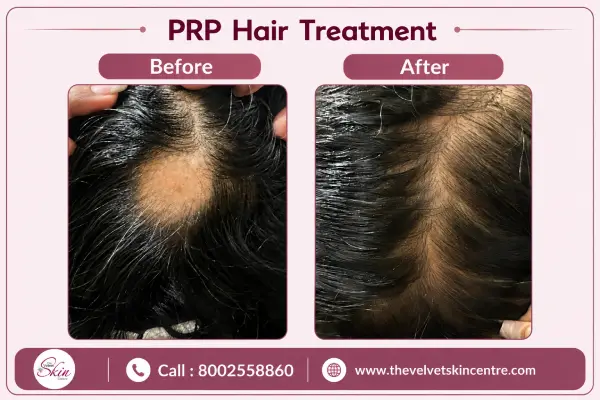
Note: Images represent the progress of an actual patient treated at The Velvet Skin Centre. Individual results may vary depending on factors such as the cause of hair loss, scalp condition, age, overall health, and adherence to the recommended treatment plan.
Real before-and-after photographs can help document progress, but outcomes vary based on:
- Cause of hair loss
- Duration of thinning
- Age
- Overall scalp health
- Treatment adherence
How Many PRP Sessions Are Usually Needed?
Most individuals require multiple sessions rather than a single treatment.
A commonly recommended approach includes:
- 3–4 initial sessions
- Sessions spaced several weeks apart
- Maintenance sessions when appropriate
Treatment schedules are personalized according to the individual’s condition and response.
Is PRP Hair Treatment Painful?
Most patients tolerate PRP well.
To improve comfort, dermatologists may use:
- Topical numbing cream
- Gentle injection techniques
Some mild discomfort can occur during the procedure, but it is generally temporary.
Possible Side Effects
Because PRP uses components derived from the patient’s own blood, the risk of adverse reactions is generally low.
Temporary effects may include:
- Mild redness
- Swelling
- Tenderness
- Temporary scalp sensitivity
These effects usually resolve within 24–48 hours.
What Is the Cost of PRP Hair Treatment in Lucknow?
The cost of PRP hair treatment can vary depending on:
- Number of sessions recommended
- Extent of hair loss
- Treatment goals
- Whether PRP is combined with other therapies
A detailed consultation is usually required to determine the most appropriate treatment plan and associated costs.
Patient Experiences with PRP Hair Treatment
Patient Feedback
“I had a great experience with hair fall treatment at The Velvet Skin Centre. After PRP sessions, my hair density improved significantly.” — Panna Lal
“I was experiencing severe hair fall and noticed a significant reduction after treatment. I was happy with the progress and overall experience.” — Warisha Nafees
Individual results vary, and treatment outcomes depend on several factors including the underlying cause of hair loss.
Hair Restoration Approach in Lucknow
At The Velvet Skin Centre, hair restoration plans are developed after:
- Detailed scalp assessment
- Hair density evaluation
- Medical history review
- Identification of contributing factors
- Discussion of realistic expectations
Treatment recommendations may include PRP, medical therapies, nutritional guidance, and other dermatologist-recommended approaches when appropriate.
The focus remains on evidence-based care, personalized treatment planning, and long-term scalp health.
Is PRP the Right Choice for Hair Loss?
PRP for hair loss remains one of the most widely used regenerative treatments because it focuses on supporting existing hair follicles and improving the scalp environment.
While PRP is not a cure for every type of hair loss and does not guarantee complete hair regrowth, it may help suitable candidates improve hair density, reduce shedding, and support healthier hair growth over time.
The key to successful treatment is proper diagnosis, realistic expectations, and selecting the right treatment plan based on the underlying cause of hair loss.
Consultation & Next Step
If you are noticing increased hair shedding, thinning hair, or reduced hair density, an early evaluation can help identify possible causes and available treatment options.
At The Velvet Skin Centre, Lucknow, treatment plans are tailored after detailed scalp analysis and medical evaluation to ensure suitability and realistic expectations.
Consult Dr Asma Parveen (MD, Dermatology) to understand whether PRP hair loss treatment is the right approach for your scalp and hair restoration goals.
For consultation or enquiries:
Indira Nagar: The Velvet Skin Centre, Amrapali Market, 23, B Block, Indira Nagar, Lucknow, Uttar Pradesh 226016
Thakurganj: The Velvet Skin Centre, Near Ghante Wala Sweets, Thakurganj, Daulatganj, Lucknow, Uttar Pradesh 226003
Phone: 8002558860
Book Appointment
Frequently Asked Questions
1. Is PRP safe for hair loss treatment?
Yes, PRP is generally considered safe when performed under proper medical supervision using established protocols.
2. Does PRP regrow hair permanently?
PRP aims to support existing hair follicles and improve hair growth conditions. Results vary, and maintenance treatments may sometimes be recommended depending on the cause of hair loss.
3. Is PRP 100% effective?
No hair loss treatment is 100% effective for every individual. Results depend on factors such as the cause of hair loss, stage of thinning, overall health, and treatment adherence.
4. When will I start seeing results?
Many individuals begin noticing changes gradually after several sessions, though timelines vary from person to person.
5. Can PRP be combined with other hair treatments?
Yes. PRP is often used alongside medical treatments, nutritional support, and other dermatologist-recommended hair restoration approaches.
6. Can I wash my hair after PRP?
Most individuals can wash their hair after a short waiting period, as advised by their dermatologist.
7. Is PRP suitable for advanced baldness?
PRP may have limited effectiveness when follicles are no longer active. A professional evaluation helps determine suitability.
The Velvet Skin Centre – Indira Nagar
The Velvet Skin Centre – Thakurganj