

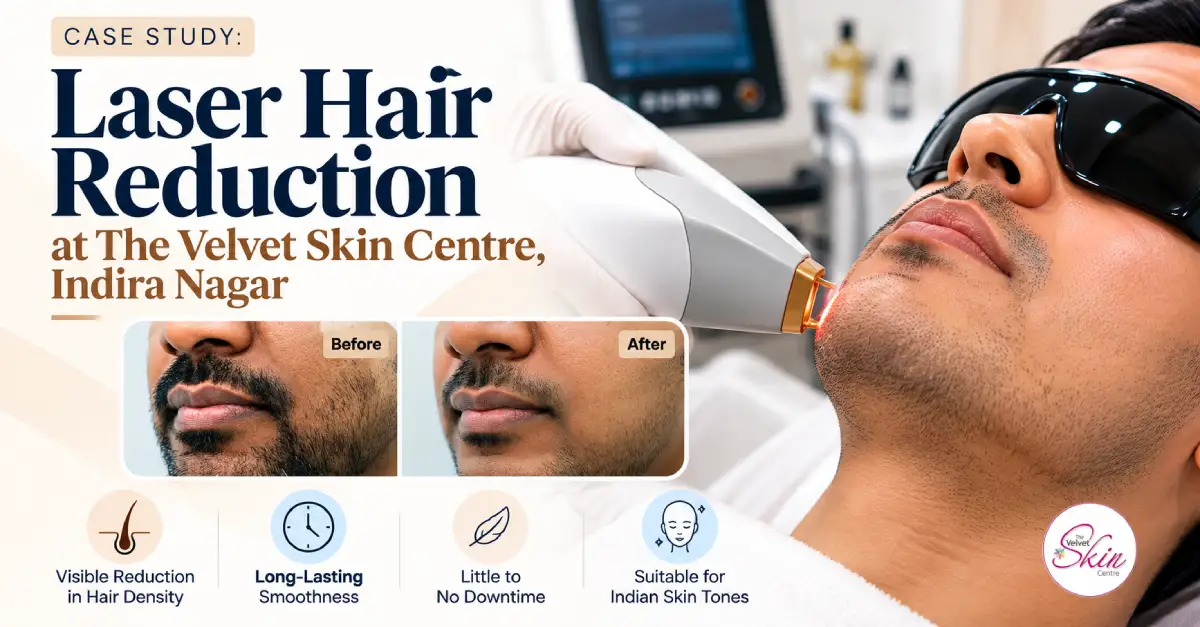
Some patients come in with questions. Some come in with research. And some come in after months of dealing with a concern that just would not go away.
This is one such story.
At a Glance
Diode laser treatment for reducing unwanted hair.Treatment duration: 4–6 sessions over 6–8 weeks. Results: visible reduction in hair density and smoother skin. Suitable for Indian skin tones. Performed by Dr. Asma Parveen at The Velvet Skin Centre, Indira Nagar, Lucknow.
The Concern
A patient visited us with concerns about excess hair growth . Like many people, he had tried the usual options—shaving, trimming, temporary fixes. But the hair kept coming back. And along with it, a secondary concern he had not expected: greying of the hair in that area.
He wanted a long-term solution. Not another temporary fix.
The Consultation
He booked a consultation at our Indira Nagar branch. During his first visit, Dr. Asma assessed his skin type, hair density, and the specific area he wanted to be treated.
Based on the assessment, Dr. Asma recommended diode laser hair reduction. This is a targeted approach that works well for focused areas with coarse hair.
The Treatment
This treatment uses focused laser energy to target hair roots, lowering hair density over time. It offers lasting smoothness with little discomfort and works on different body areas.
Treatment duration: 4–6 sessions over 6–8 weeks, depending on hair type and area.
He started his sessions at our Indira Nagar clinic. Each session was spaced to match his hair growth cycle, and the settings were calibrated for his skin type.
What he noticed over time:
- Reduced hair density in the treated area
- Slower regrowth between sessions
- No irritation or downtime after treatment
- Visible improvement in skin texture
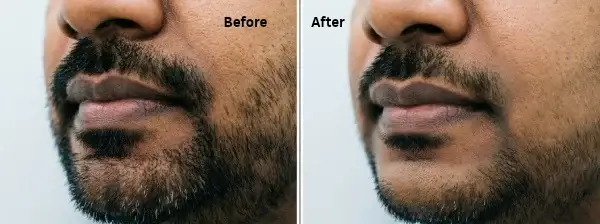
He completed a series of sessions over six months. The before-and-after image above shows the difference clearly—smoother skin, significantly reduced hair, and a more even appearance.
A Secondary Benefit
One thing he mentioned in his review that stood out: greying of the hair in the treated area also reduced.
While laser hair reduction is not a treatment for greying hair, the reduction in hair density in that area meant fewer grey hairs were visible. This was an unexpected benefit that made a real difference to him.
What He Says
In his own words:
“I consulted for laser hair reduction and for greying of hair. After 6 months of treatment, visible reduction of white hair was seen. For laser hair removal, I would suggest Dr. Asma ma’am is best. I took diode laser for laser hair reduction for chin in Indiranagar branch at The Velvet Skin Centre, Lucknow.”
Why This Case Stands Out
Factor | What Made the Difference |
Targeted treatment | Area treated with precision, not a broad approach |
Consistent sessions | Patient completed his full treatment plan |
Skin-appropriate settings | Diode laser calibrated for his skin type |
Realistic expectations | He understood results build over time, not overnight |
What This Means for You
Whether your concern is the chin, jawline, underarm, or another area, this case illustrates what consistent treatment can achieve.
Key takeaways:
- Laser hair reduction works best when done in a series, not as a one-time fix
- Coarse hair in focused areas responds well to targeted diode laser treatment
- Results build gradually over months, not days
- Secondary benefits—like reduced visibility of grey hair—can occur
Before and After Laser Hair Reduction: What to Do
Before Treatment (48 Hours)
Avoid | Do |
Waxing, plucking, or threading | Shave the area 24–48 hours before |
Sun exposure and tanning | Keep the area clean and dry |
Retinoids and exfoliating acids | Inform your dermatologist of any medications |
Shaving on the same day |
After Treatment (48 Hours)
Avoid | Do |
Sun exposure | Apply sunscreen daily |
Hot showers, saunas, and steam rooms | Keep the area moisturized |
Strenuous exercise | Follow aftercare instructions provided by your dermatologist |
Exfoliating or active skincare |
Frequently Asked Questions
1 : How many sessions are needed for laser hair reduction?
Most patients need 4–6 sessions, spaced 4–6 weeks apart. The precise count varies with hair thickness, growth phase, and how your body responds.
2 : Is laser hair reduction safe for Indian skin?
Yes—when performed with the right technology and settings. Diode lasers are safe for Indian skin tones when calibrated by an experienced dermatologist.
3: Can laser hair reduction help with greying hair?
This treatment works on hair roots to lower regrowth. It is not a treatment for greying hair, but reduced hair density can make grey hair less visible.
4: How long do results last?
Results are long-lasting but not permanent. Maintenance sessions may be needed every 6–12 months, depending on individual factors.
5: Is there any downtime after treatment?
None. You can resume your routine right away. Slight redness may appear but typically fades within hours.
Laser Hair Reduction Cost in Lucknow
The cost of laser hair reduction depends on:
- Area treated (chin, jawline, underarm, full face, etc.)
- Number of sessions required
- Hair density and skin type
At The Velvet Skin Centre, treatment is priced transparently. During your consultation, Dr. Asma will discuss the estimated cost based on your specific needs. Flexible payment options are available.
For exact pricing, Call : 80025 58860
Considering Treatment?
If laser hair reduction in Lucknow is something you have been considering, a consultation is the ideal starting point. Dr. Asma will assess your skin and hair type and recommend an approach tailored to you.
Book a consultation at The Velvet Skin Centre, Indira Nagar.
Summary
Element | Details |
Concern | Unwanted hair, greying hair in treated area |
Treatment | Diode laser hair reduction |
Location | The Velvet Skin Centre, Indira Nagar, Lucknow |
Duration | 6 months (patient experience); 4–6 sessions over 6–8 weeks is standard |
Result | Visible reduction in hair, smoother skin, reduced visibility of grey hair |
Disclaimer: Individual results may vary based on skin type, hair density, hormonal factors, and consistency with treatment. This case study reflects one patient’s experience and should not be interpreted as a guarantee of similar results for every patient.