
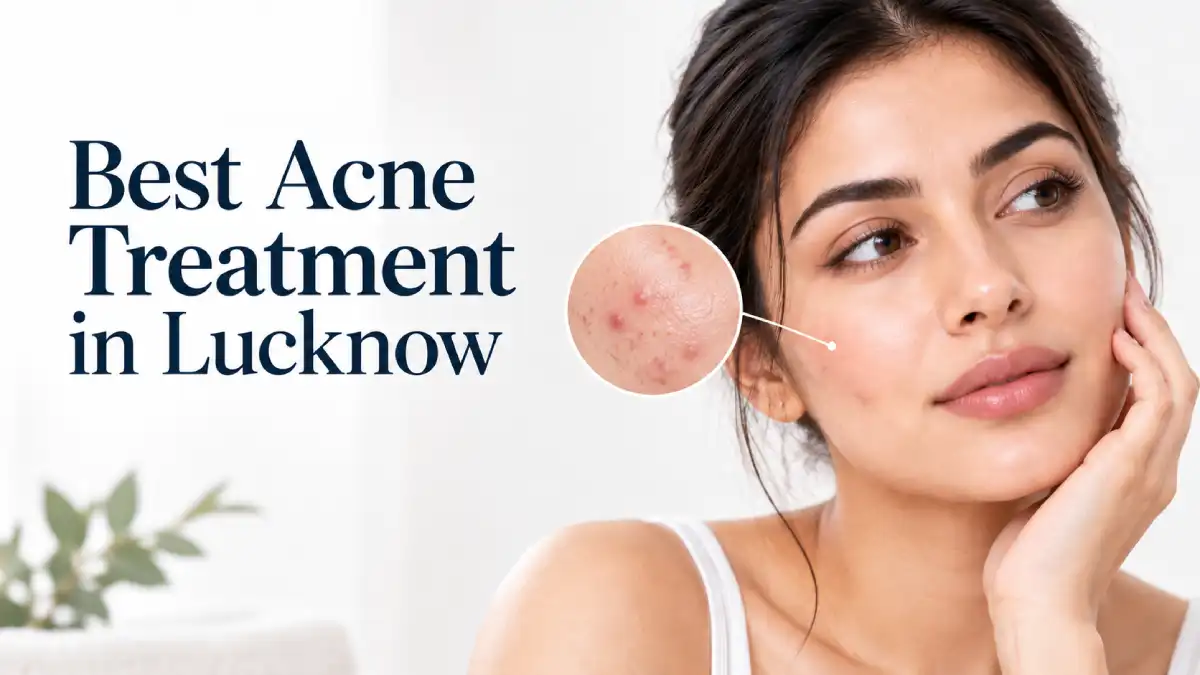
Acne is no longer limited to teenagers. Dermatologists across India—including Lucknow—see patients with adult acne, hormonal breakouts, stress-related flare-ups, back acne, and persistent or treatment-resistant cases.
Pollution, changing lifestyles, hormonal factors, excessive sweating, stress, and unsuitable skincare routines can all contribute to recurring breakouts.
If you are searching for effective acne care in Lucknow, this detailed guide will help you understand:
- Why breakouts occur
- Which treatment approaches may help
- When home care may be enough—and when professional care is advisable
- Treatment costs in Lucknow
- How to reduce the risk of acne scars
- How to choose the right dermatologist
This guide is prepared by Dr Asma Parveen & the team at The Velvet Skin Centre, with clinics in Indira Nagar and Thakurganj, Lucknow, to help patients make informed decisions about acne care.
Ready to Explore Your Options?
If you are struggling with persistent breakouts, recurring flare-ups, or acne scars, a dermatologist can help identify the type and severity of acne and develop an appropriate treatment plan.
Book a consultation with Dr. Asma to discuss your skin concerns and goals.
Why Acne Is So Common in Lucknow
Breakouts can be influenced by several environmental, hormonal, and lifestyle factors. In a city like Lucknow, these may include:
- Air pollution and dust exposure
- Heat, humidity, and excessive sweating
- Hormonal changes and conditions such as PCOS
- Irregular sleep and lifestyle stress
- Use of unsuitable or comedogenic cosmetic products
- Delayed professional evaluation
Acne treatment today is not simply about drying out pimples. The goal is to identify contributing factors, control active acne, reduce the risk of marks and scars, and maintain healthier skin over time.
Types of Acne Dermatologists Commonly Treat
Correct diagnosis is important because different forms of acne can require different treatment approaches. Understanding types of acne can help you recognise the type of breakout you may be experiencing.
1. Comedonal Acne
- Whiteheads and blackheads
- Common in teenagers and young adults
2. Inflammatory Acne
- Red, swollen, or painful pimples
- Can leave persistent marks or scars, particularly when severe or picked
3. Hormonal Acne
- Often affects the jawline, chin, and lower cheeks
- May be associated with hormonal fluctuations or conditions such as PCOS
4. Nodulocystic Acne
- Deep and painful lesions
- Greater risk of permanent scarring
5. Adult Acne
- Breakouts that continue or develop after the teenage years
- May be associated with lifestyle, cosmetics, stress, or hormonal factors
For a detailed guide, explore our resource on adult acne treatment.
Best Acne Treatments in Lucknow
Acne treatment should be personalised according to the type and severity of acne, skin characteristics, medical history, and previous treatment response.
At The Velvet Skin Centre, treatment is planned around the individual’s skin rather than following a one-size-fits-all approach.
1. Medical Management: The Foundation of Care
Depending on the acne pattern and severity, a dermatologist may recommend:
- Topical medications
- Oral medicines when appropriate
- Hormonal evaluation or treatment when clinically indicated, including in some patients with PCOS-related acne
- Best suited for: Many mild to moderate cases, as well as patients who need medical control of persistent or recurrent acne.
2. Chemical Peels for Acne Control
Chemical peels may be used as part of an acne treatment plan to help:
- Unclog pores
- Reduce excess oil
- Control certain types of active breakouts
- Improve skin texture
Depending on the patient’s skin and acne pattern, dermatologists may use:
- Salicylic acid peels
- Glycolic acid peels
- Combination peels
Results vary from person to person, and a dermatologist can determine the appropriate peel, strength, and treatment interval.
3. Laser and Light-Based Treatments
Selected laser or light-based treatments may be considered as part of acne management. Depending on the technology and treatment plan, they may help address factors associated with acne such as inflammation, excess oil production, or acne-causing bacteria.
These treatments may be considered for patients with recurrent acne or those who have not responded adequately to other approaches.
If redness and inflammation are major concerns, learn more about how to reduce acne redness.
4. Combination Therapy for Pustular Acne and Redness
Patients with pustules, inflammatory lesions, and facial redness may benefit from a combination approach rather than relying on a single treatment.
The exact combination depends on the acne type, severity, skin sensitivity, and response to previous treatment.
5. HydraFacial for Acne-Prone Skin
HydraFacial can be used as a supportive treatment for selected acne-prone skin concerns.
It may be helpful for:
- Mild breakouts
- Blackheads and whiteheads
- Oily or congested skin
- Surface-level skin maintenance
However, HydraFacial should not be considered a replacement for medical acne treatment when active or persistent acne requires dermatological management.
Explore whether HydraFacial can treat acne as part of your skincare plan.
Acne vs. Scars: Know the Difference
Many patients use the term “acne scars” for every mark left behind after a breakout. However, active acne and post-acne marks or scars are different concerns.
Active acne refers to current lesions such as whiteheads, blackheads, papules, pustules, nodules, or cysts.
Acne scars develop after inflammation damages deeper skin structures and can result in changes in skin texture.
Understanding whether you are treating acne or scars is an important first step in choosing an appropriate treatment strategy.
Treatment for Different Age Groups
Acne can behave differently at different stages of life. Treatment may therefore be adapted according to age, skin characteristics, hormonal factors, and lifestyle.
Age Group | Common Considerations | Possible Treatment Approach |
Teenagers (13–19) | Hormonal changes, oily skin, early breakouts | Gentle topicals, dermatologist-guided care, lifestyle guidance |
Young Adults (20–30) | Stress, lifestyle, cosmetics, persistent acne | Medical management, selected peels, supportive treatments |
Adults (30–45) | Hormonal factors, pigmentation, recurrent acne | Medical assessment, hormonal evaluation when indicated, combination treatment |
Perimenopause (45+) | Hormonal fluctuations, dryness, changing skin barrier | Gentle skincare, barrier support, targeted treatment |
The treatment plan should be based on the individual rather than age alone.
How Acne Is Diagnosed: What to Expect at Your Consultation
A proper diagnosis is an important part of effective acne management. At The Velvet Skin Centre, consultation may include:- Detailed skin analysis – assessing the type, severity, and distribution of acne
- Medical history review – considering hormonal factors, medications, lifestyle, and previous treatments
- Trigger identification – reviewing skincare products, stress, lifestyle, and environmental factors
- Scar and pigmentation assessment – identifying existing marks and texture changes
- Personalised treatment planning – developing an approach based on the patient’s skin and goals
Diet: What Actually Helps?
Diet does not cause acne in every individual, but dietary patterns may influence breakouts in some people.
Dietary Factor | What Research Suggests |
High-glycemic foods | May contribute to acne in some individuals |
Dairy, particularly skim milk | May be associated with breakouts in some people |
Omega-3 fatty acids | May support healthy inflammatory balance |
Fruits and vegetables | Provide antioxidants and nutrients important for overall skin health |
Adequate hydration | Supports normal skin and overall health |
Rather than following restrictive diets based on social media advice, focus on a balanced eating pattern and discuss persistent or diet-associated flare-ups with your dermatologist.
Hormones: When to Consider Evaluation
Hormonal factors may be relevant when acne has a particular pattern or does not respond as expected to standard treatment.
Signs that may warrant further evaluation include:
- Breakouts concentrated around the jawline and chin
- Flare-ups associated with menstrual cycles
- Persistent acne into adulthood
- Irregular periods or other symptoms suggestive of PCOS
- Acne that continues despite appropriate treatment
Depending on symptoms and medical history, a dermatologist may recommend investigations such as:
- Hormonal testing
- Thyroid function testing
- Assessment for insulin resistance
- Pelvic ultrasound when PCOS is suspected
Not every patient with acne requires hormonal testing. Investigations should be recommended according to individual symptoms and clinical findings.
Scar Treatments: What Works for Indian Skin?
Acne scars can have different shapes and depths, so treatment needs to be selected according to the scar type.
Scar Type | Appearance | Possible Treatment Approach |
Icepick scars | Narrow, deep pits | TCA Cross, selected laser treatments |
Boxcar scars | Broad, defined depressions | Microneedling, fractional CO₂ laser |
Rolling scars | Wavy or uneven texture | Subcision, microneedling, selected fillers |
Hypertrophic scars | Raised, thickened areas | Steroid injections, selected laser treatments |
Post-inflammatory pigmentation | Flat dark marks | Chemical peels, topical treatment, sunscreen |
The earlier active acne is appropriately managed, the more opportunity there is to reduce the risk of significant post-acne scarring.
Skincare Routine for Acne-Prone Skin
A simple routine can support medical treatment without unnecessarily irritating the skin.
Morning
- Gentle cleanser
- Lightweight, non-comedogenic moisturiser
- Broad-spectrum sunscreen, preferably SPF 30 or higher
Night
- Gentle cleanser
- Prescribed topical treatment, if recommended
- Moisturiser
Weekly
- Exfoliation only if recommended by your dermatologist
Avoid
- Over-cleansing
- Harsh physical scrubs
- Combining multiple strong active ingredients without guidance
- Picking or squeezing pimples
A complicated routine is not necessarily a better routine. Consistency and suitability for your skin are more important.
Why Local Expertise Matters in Lucknow
Acne management can benefit from considering environmental and lifestyle factors relevant to the patient.
For patients in Lucknow, these may include:
- Heat and humidity
- Pollution and dust exposure
- Individual tendency toward pigmentation
- Lifestyle and stress
- Cosmetic and hair-care products
- Local skincare habits and home remedies
A dermatologist can take these factors into account while developing an appropriate treatment and maintenance plan.
Why Home Remedies and OTC Products Often Fail
Many patients first try:
- Social media skincare hacks
- DIY home remedies
- Random pharmacy creams
- Multiple active ingredients at the same time
These approaches may sometimes worsen acne or irritate the skin, particularly when the underlying diagnosis is incorrect.
Potential problems include:
- Increased breakouts
- Irritant or steroid-induced acne
- Skin-barrier damage
- Persistent pigmentation
Why Dermatologist-Guided Care Makes a Difference
Acne treatment works best when the diagnosis, treatment choice, skincare routine, and follow-up are coordinated around the individual’s condition.
Treatment Cost in Lucknow
The cost of acne treatment varies depending on:
- Acne severity
- Treatment type
- Number of sessions required
- Whether combination treatments are needed
Approximate Cost Range
Treatment | Approximate Cost |
Dermatologist consultation | ₹500–₹1,000 |
Chemical peels | ₹2,000–₹4,000 per session |
Advanced procedures | Customised after assessment |
These are indicative ranges rather than fixed treatment prices. The final cost depends on the patient’s condition and recommended treatment plan.
When Should You See a Dermatologist?
Consider consulting a dermatologist if:
- Breakouts continue for more than 4–6 weeks
- Pimples are painful or deep
- Marks or scars are developing
- Flare-ups keep returning
- OTC products are not helping
- Acne is affecting your confidence or daily life
Early assessment can help control acne and may reduce the risk of persistent marks and scarring.
If acne continues to return after treatment, understand why acne comes back after treatment.
How Scars Can Be Prevented
Not every acne scar can be prevented, but appropriate acne treatment can help reduce the risk of significant scarring.
Key steps include:
- Treat active acne early
- Avoid picking or squeezing lesions
- Follow dermatologist-guided treatment
- Address persistent or severe acne rather than waiting for it to settle repeatedly
- Discuss scar-prevention strategies when appropriate
Acne control and scar management should be considered together, particularly when breakouts are inflammatory or severe.
Body Acne: Don’t Ignore It
Body acne commonly affects areas such as the back, chest, shoulders, and upper arms. Sweat, friction, blocked pores, excess oil, and certain products may contribute.
Management may include:
- Appropriate cleansing
- Acne-control body washes
- Breathable clothing
- Avoiding prolonged sweat and friction
- Dermatologist-guided exfoliation or treatment when required
Learn more about how to get rid of body acne.
Why Choose The Velvet Skin Centre?
Expert Dermatologist-Led Care
At The Velvet Skin Centre, acne treatment is led by Dr. Asma Parveen, with 14+ years of clinical experience in dermatology.
She treats a broad range of acne concerns, including teenage, adult, hormonal, and persistent acne. The clinic focuses on diagnosis, personalised treatment planning, evidence-based dermatology, and appropriate use of advanced procedures.
Patients choose the clinic for:
- Dermatologist-led care by Dr. Asma Parveen
- 14+ years of clinical experience
- 5,000+ patients treated
- Individualised treatment planning
- Assessment of underlying factors
- Chemical peels and advanced technologies when appropriate
- Consideration of Indian skin characteristics
- Focus on acne control and reducing the risk of scarring
- Indira Nagar and Thakurganj locations
What Our Patients Say
Asifa Khan
“I had whiteheads, acne spots, acne scars, blackheads, open pores on my face, and back acne with intense itching. I consulted The Velvet Skin Centre, Indira Nagar. I underwent back peel, comedone extraction, and chemical peel sessions. After at least three sessions, the results were really good. I highly recommend this clinic for acne treatment.”
Jyoti Rohit
“I was facing pustules, acne, and redness all over my face. I took sessions of chemical peeling along with laser toning and oral medications from Dr. Asma at The Velvet Skin Centre, Indira Nagar. I’m very thankful for the results she committed and delivered.”
Nida Rahman
“Finally, a dermatologist who actually helped! Dr. Asma was more patient and clear than any other skin doctor I’ve seen. My acne is so much better, and my skin feels healthy again.”
Frequently Asked Questions
Q1. Is acne curable permanently?
Acne can often be effectively controlled with appropriate treatment and ongoing maintenance. However, some people may experience recurrence, particularly when hormonal or other contributing factors remain.
Q2. How long does acne treatment take?
The timeline varies according to acne severity and treatment. Some patients may begin noticing improvement within several weeks, while more persistent acne may require longer-term management.
Q3. Can acne return after treatment?
Yes. Acne can recur, particularly when underlying triggers or hormonal factors continue. Maintenance care can help manage recurrence.
Learn more about why acne comes back after treatment.
Q4. Is acne treatment safe for sensitive skin?
Many acne treatments can be adapted for sensitive skin when selected and performed appropriately under dermatologist supervision.
Q5. Can I treat active acne and scars together?
Treatment can address both concerns, but active acne generally needs to be brought under control before more aggressive scar procedures are considered.
Understand the difference between treating acne or scars.
Q6. What is the cost of acne treatment in Lucknow?
Costs vary depending on the condition, treatment type, number of sessions, and whether combination therapy is required. A consultation allows the dermatologist to recommend an appropriate plan and explain the associated cost.
Q7. Does diet affect acne?
Diet may influence breakouts in some individuals. High-glycemic foods and certain dairy products have been associated with acne in some studies, but dietary effects vary between individuals.
Q8. When should I consider hormonal testing?
Hormonal evaluation may be considered when acne is associated with signs such as jawline breakouts, menstrual flare-ups, irregular periods, symptoms of PCOS, or persistent adult acne. Testing is based on individual clinical findings.
Q9. What is the best treatment for hormonal acne in Lucknow?
Hormonal acne often requires an individualised approach. Depending on the patient’s symptoms and medical history, treatment may include prescription topical medicines, oral medication, hormonal evaluation, chemical peels, or selected in-clinic treatments.
Q10. How do I know if my acne is hormonal?
Hormonal acne may have patterns such as recurring jawline or chin breakouts, menstrual-cycle-related flare-ups, or persistent adult acne. However, appearance alone cannot confirm the underlying cause. A dermatologist can assess the pattern and medical history.
Q11. Which acne treatment is safest for Indian skin?
Several acne treatments can be used safely in Indian skin when appropriately selected and performed. Because Indian skin can be more prone to pigmentation after inflammation, treatment intensity and technique should be tailored to the individual.
Q12. Can I get acne treatment during pregnancy?
Some acne treatments are appropriate during pregnancy, while others should be avoided. Always inform your dermatologist if you are pregnant, planning pregnancy, or breastfeeding so that treatment can be selected appropriately.
Q13. How much does acne treatment cost in Lucknow?
The cost depends on acne severity, treatment type, and the number of sessions. Consultation typically ranges from ₹500–₹1,000, while chemical peels may range from ₹2,000–₹4,000 per session. Advanced procedures are customised after assessment.
Q14. What is the best skincare routine for acne-prone skin in Lucknow’s climate?
A simple routine with a gentle cleanser, lightweight moisturiser, and non-comedogenic sunscreen is a good starting point. Avoid excessively heavy or pore-clogging products and seek personalised advice if acne remains persistent.
Meet Your Dermatologist
Dr. Asma Parveen, MD (Dermatology)
- 14+ years of clinical experience
- 5,000+ patients treated across Lucknow
- Expertise in acne, acne scars, pigmentation, and hair restoration
- Practices at The Velvet Skin Centre, Indira Nagar and Thakurganj
Dr. Asma Parveen provides dermatologist-led care for different forms of acne, including teenage, adult, hormonal, and persistent cases.
Related Reading
Explore our detailed guides on specific acne concerns:
Topic | Blog |
Types | |
Acne vs. Scars | |
Recurrence | |
Adult Acne | |
Body Acne | |
Redness | |
HydraFacial |
Book an Acne Consultation in Lucknow
If persistent breakouts, acne marks, or scarring are affecting your skin or confidence, professional evaluation can help identify the underlying pattern and appropriate treatment options.
Visit Our Clinics
Indira Nagar: The Velvet Skin Centre, Amrapali Market, 23, B Block, Indira Nagar, Lucknow, Uttar Pradesh 226016
Thakurganj: The Velvet Skin Centre, Near Ghante Wala Sweets, Thakurganj, Daulatganj, Lucknow, Uttar Pradesh 226003.