

Understanding Why Acne Can Continue Into Adulthood
Acne is often associated with teenage years, but many adults continue to experience persistent breakouts well into their twenties, thirties, and beyond. Adult acne can affect both men and women and may appear even in individuals who never struggled with acne during adolescence.
Factors such as hormonal fluctuations, stress, lifestyle habits, genetics, and environmental influences can contribute to recurring breakouts. In addition to affecting the skin, acne can also impact confidence, self-image, and overall quality of life.
At The Velvet Skin Centre, with clinics in Indira Nagar and Thakurganj, Lucknow, patients receive personalized acne treatment plans under the guidance of Dr Asma Parveen (MD Dermatology), a dermatologist with over 14 years of experience and 5000+ patients treated. Treatment recommendations are based on detailed skin evaluation, acne severity, and individual skin concerns.
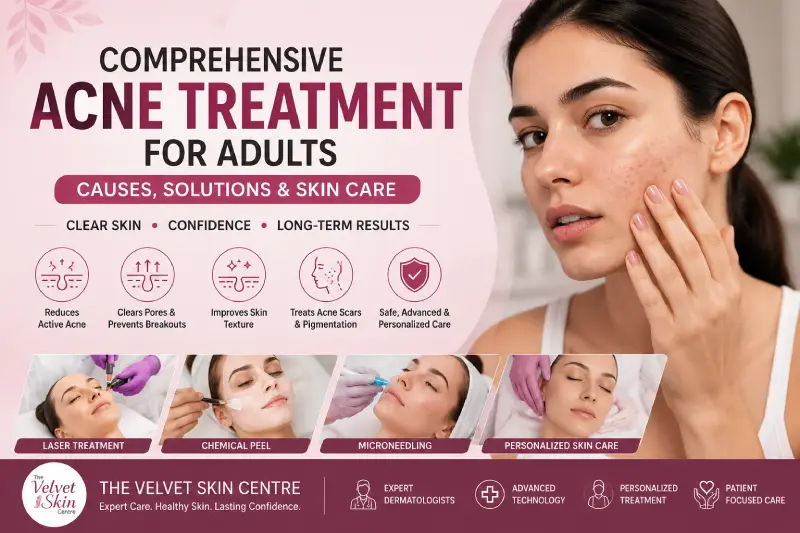
Understanding Adult Acne
Adult acne develops when hair follicles become clogged with oil, dead skin cells, and other impurities. Depending on the underlying cause, acne may present differently from person to person.
Common signs include:
- Whiteheads
- Blackheads
- Papules
- Pustules
- Painful cystic acne
- Acne-related pigmentation
- Acne scars
Proper diagnosis is important because treatment strategies often vary depending on the type and severity of acne.
What Causes Adult Acne?
Several factors can contribute to persistent or recurring acne.
Hormonal Changes
Hormonal fluctuations may increase oil production and contribute to breakouts.
Common triggers include:
- Menstrual cycle changes
- PCOS (Polycystic Ovary Syndrome)
- Pregnancy
- Perimenopause and menopause
Stress
Stress does not directly cause acne, but it may influence hormonal pathways that contribute to increased breakouts in some individuals.
Genetics
A family history of acne can increase the likelihood of developing persistent acne.
Skincare Products
Using products that are too heavy or unsuitable for your skin type may contribute to clogged pores and breakouts.
Diet and Lifestyle Factors
Certain dietary patterns, inadequate sleep, and lifestyle habits may influence acne severity in susceptible individuals.
Types of Adult Acne
Blackheads and Whiteheads
These types of acne develop when pores become blocked with oil, dead skin cells, and other debris, usually without significant redness or swelling.
Inflammatory Acne
This includes red, swollen pimples that may cause discomfort and increase the risk of post-acne marks.
Hormonal Acne
Hormonal acne often appears around:
- Chin
- Jawline
- Lower face
Many individuals notice flare-ups around specific hormonal cycles.
Cystic Acne
Cystic acne involves deeper, painful lesions beneath the skin and may increase the likelihood of scarring if left untreated.
What Skin Concerns Can Acne Lead To?
Acne is not limited to active breakouts.
Many individuals also experience:
| Acne Concern | Potential Impact |
| Active pimples | Inflammation and discomfort |
| Post-acne pigmentation | Dark marks after healing |
| Enlarged pores | Uneven skin texture |
| Acne scars | Long-term texture changes |
| Recurrent breakouts | Ongoing skin irritation |
Addressing acne early may help reduce the risk of long-term skin changes.
Modern Acne Treatment Options
Acne treatment depends on the type, severity, and underlying cause of the condition.
1. Medical Acne Management
Treatment may include:
- Topical medications
- Prescription creams and gels
- Oral medications when appropriate
- Hormonal management in selected cases
2. Chemical Peels
Chemical peels help remove accumulated dead skin cells and may improve:
- Mild acne
- Acne marks
- Skin texture
- Congestion
3. Laser-Based Acne Treatments
Certain laser treatments may help reduce:
- Active acne inflammation
- Acne-related redness
- Acne scars
Treatment suitability depends on individual skin assessment.
4. Microneedling for Acne Scars
Microneedling is commonly used for improving:
- Acne scars
- Skin texture
- Collagen stimulation
5. Combination Treatment Plans
Many patients benefit from combining different approaches depending on:
- Active acne
- Pigmentation
- Scarring
- Skin sensitivity
Addressing Hormonal and Cystic Acne
Hormonal and cystic acne often require a more comprehensive approach.
Management may include:
- Detailed medical evaluation
- Hormonal assessment
- Prescription treatments
- Lifestyle recommendations
- Long-term maintenance planning
Because these forms of acne can be persistent, early intervention is often beneficial.
Daily Habits That May Help Reduce Acne Flare-Ups
While professional treatment plays an important role, daily skincare habits also matter.
Gentle Cleansing
Use a gentle cleansing routine that removes excess oil and impurities while helping maintain the skin’s natural protective function.
Use Suitable Skincare Products
Choose products designed for acne-prone skin when recommended by your dermatologist.
Sun Protection
Daily sunscreen use may help reduce pigmentation and protect healing skin.
Avoid Picking Pimples
Picking or squeezing acne lesions may increase the risk of pigmentation and scarring.
Who May Consider Professional Acne Treatment?
A dermatology consultation may be worth considering if you notice:
- Persistent acne despite home care
- Painful cystic acne
- Frequent breakouts
- Acne scars
- Dark marks after acne
- Adult-onset acne
Early treatment can often help prevent progression and long-term skin concerns.
Acne Treatment Approach in Lucknow
At The Velvet Skin Centre, acne management begins with:
- Detailed skin analysis
- Acne severity assessment
- Evaluation of possible triggers
- Identification of pigmentation or scarring
- Development of a personalized treatment plan
The focus remains on evidence-based treatment, skin health, and long-term acne control rather than temporary solutions.
Patient Experiences
Patient Feedback
“Consulted Dr. Asma Parveen for acne treatment and hair fall concerns. After two months of treatment, the results were very good.” — Asad Khan
“I had been struggling with acne for years. The consultation, treatment process, and overall experience were excellent.” — Sankalp Pandey
Individual results vary depending on skin condition, acne severity, and treatment adherence.
Can Adult Acne Be Controlled?
Most forms of adult acne can be managed effectively when the underlying causes are properly identified and treated.
Because acne varies from person to person, treatment plans should be individualized rather than based on generalized skincare advice.
The earlier acne is addressed, the greater the opportunity to reduce ongoing breakouts, pigmentation, and acne scarring.
Consultation & Next Step
If you are experiencing persistent acne, acne scars, pigmentation, or recurring breakouts, a professional skin evaluation can help identify potential causes and suitable treatment options.
At The Velvet Skin Centre, Lucknow, treatment plans are customized according to individual skin type, acne severity, and long-term skin goals.
Consult Dr Asma Parveen (MD, Dermatology) to understand the most appropriate approach for your skin concerns.
For consultation or enquiries:
Indira Nagar: The Velvet Skin Centre, Amrapali Market, 23, B Block, Indira Nagar, Lucknow, Uttar Pradesh 226016
Thakurganj: The Velvet Skin Centre, Near Ghante Wala Sweets, Thakurganj, Daulatganj, Lucknow, Uttar Pradesh 226003
Phone: 8002558860
Book Appointment
Frequently Asked Questions
1. Why do adults get acne?
Adult acne may be linked to hormones, stress, genetics, skincare products, lifestyle factors, and certain medical conditions.
2. Can acne be treated permanently?
Many forms of acne can be controlled effectively, although ongoing maintenance may sometimes be required.
3. Does hormonal acne require different treatment?
Yes. Hormonal acne often requires targeted treatment based on the underlying cause.
4. Can acne scars be improved?
Several treatments, including microneedling, chemical peels, and laser procedures, may help improve acne scars.
5. When should I see a dermatologist for acne?
If acne is persistent, painful, causing scars, or not responding to routine skincare, a dermatologist evaluation is recommended.
6, Is acne treatment suitable for sensitive skin?
Treatment plans can often be customized for sensitive skin after proper assessment.
The Velvet Skin Centre – Indira Nagar
The Velvet Skin Centre – Thakurganj